Tell us about the job
Takes about a minute. No obligation.
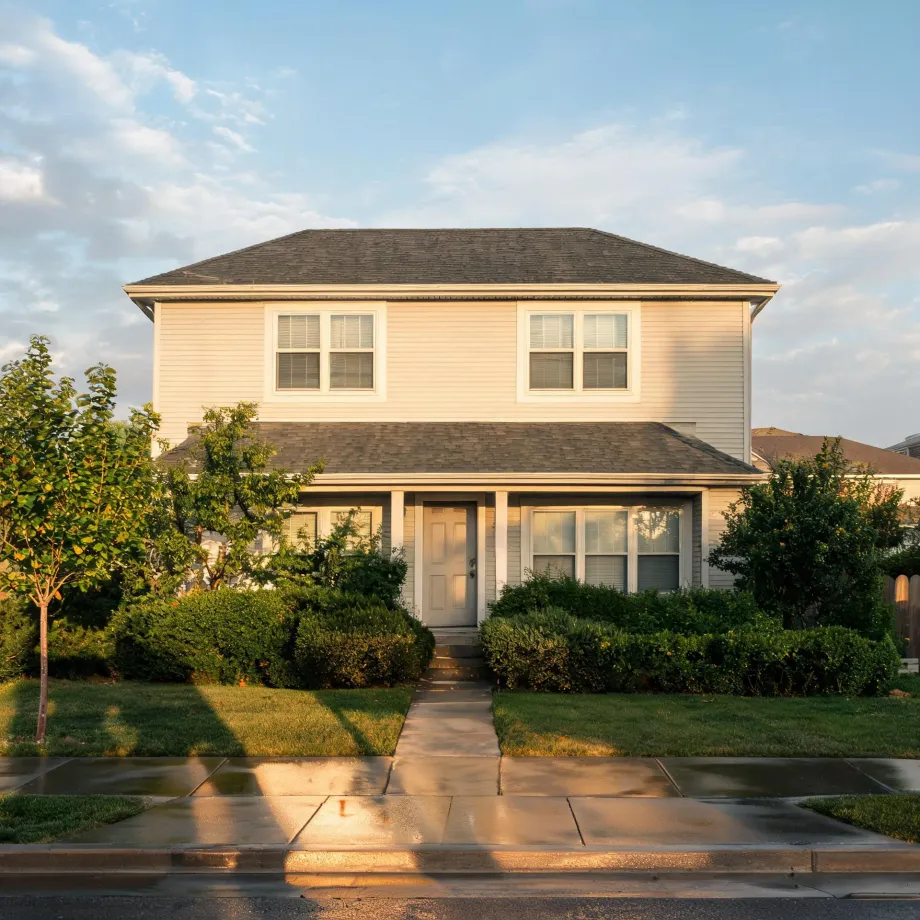
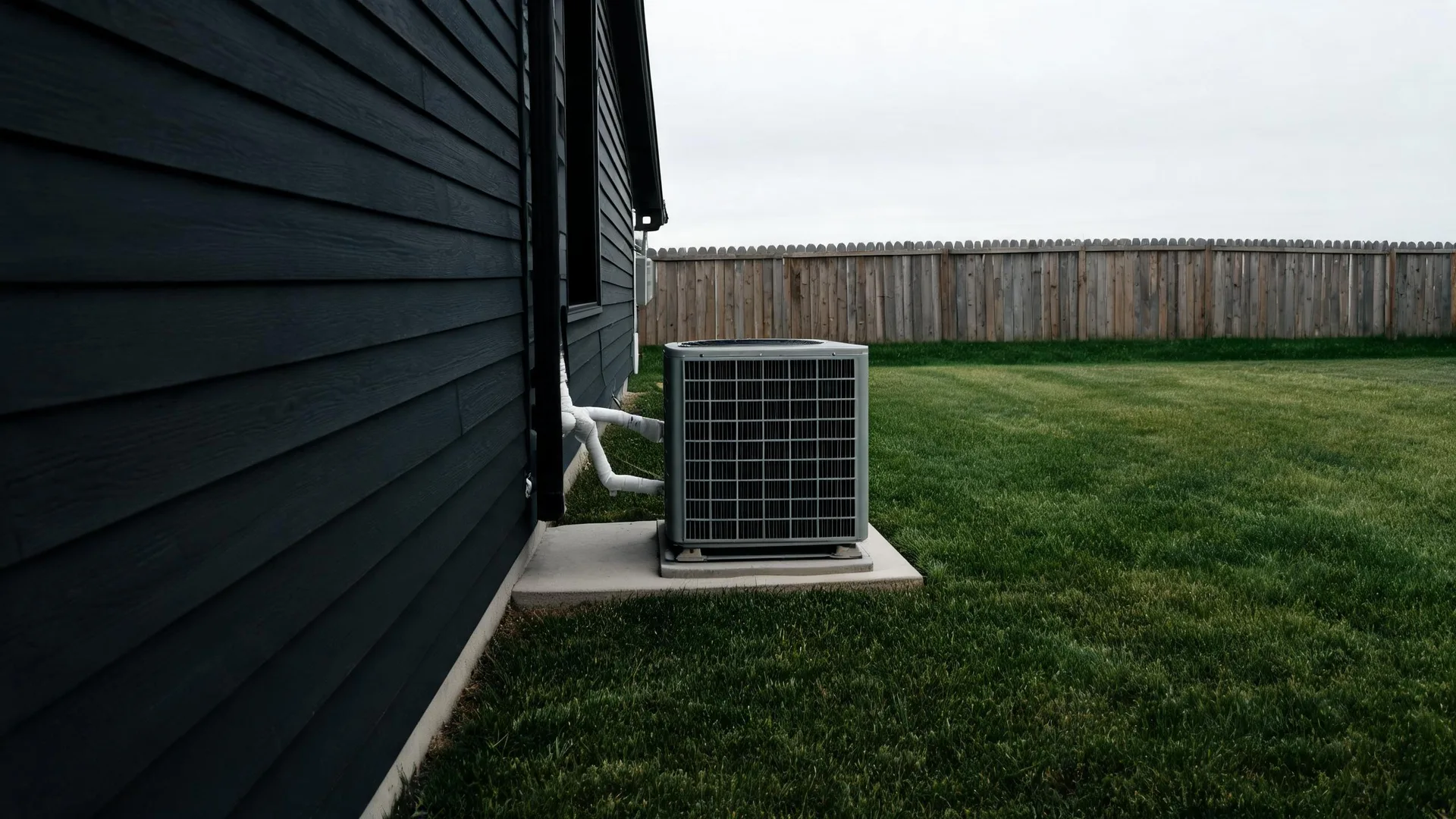
A contractor sizing a central AC system here has to price what the equipment will do over years of near-total standby, not peak summer performance. Homes in Whatcom County, WA have essentially no cooling season — no month of the year is warm enough to call for it. Seals dry, contactors corrode, and refrigerant circuits that never cycle build up moisture at joints that would otherwise stay worked in. An installer who treats this like a high-demand market will oversize the unit and guarantee shorter seal life. The contractor's first job is a load calculation that accounts for how rarely this compressor will actually start.
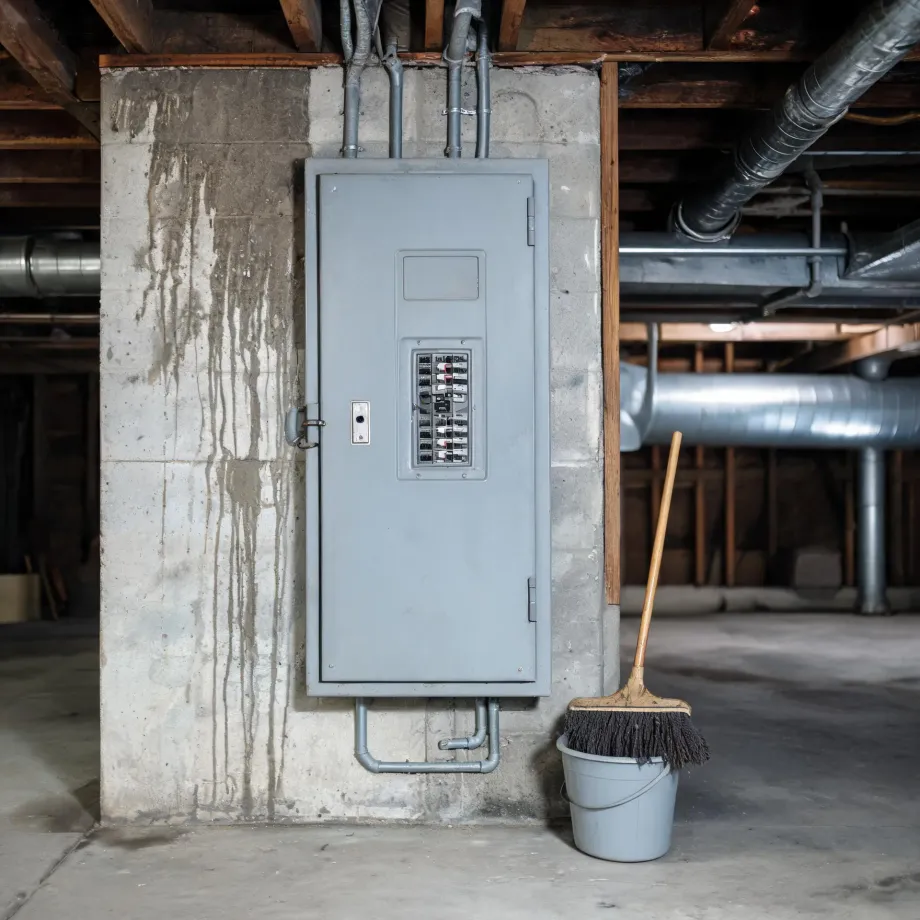
Ductwork laid in for a furnace moves air differently than a central AC system needs. Half the homes in Whatcom County, Washington were built in 1989 or earlier (2020-2024 ACS 5-year). That gap between what the house was built around and what a new system has to push through it is where installation decisions get made. A contractor who pulls permits for central AC here will open duct runs and measure how they branch, because a system that cools well depends on whether those passages can handle the volume. The electrical service gets the same look, since a panel sized for the original load may not match what a modern condenser draws.
What Gets Installed With a New Central AC
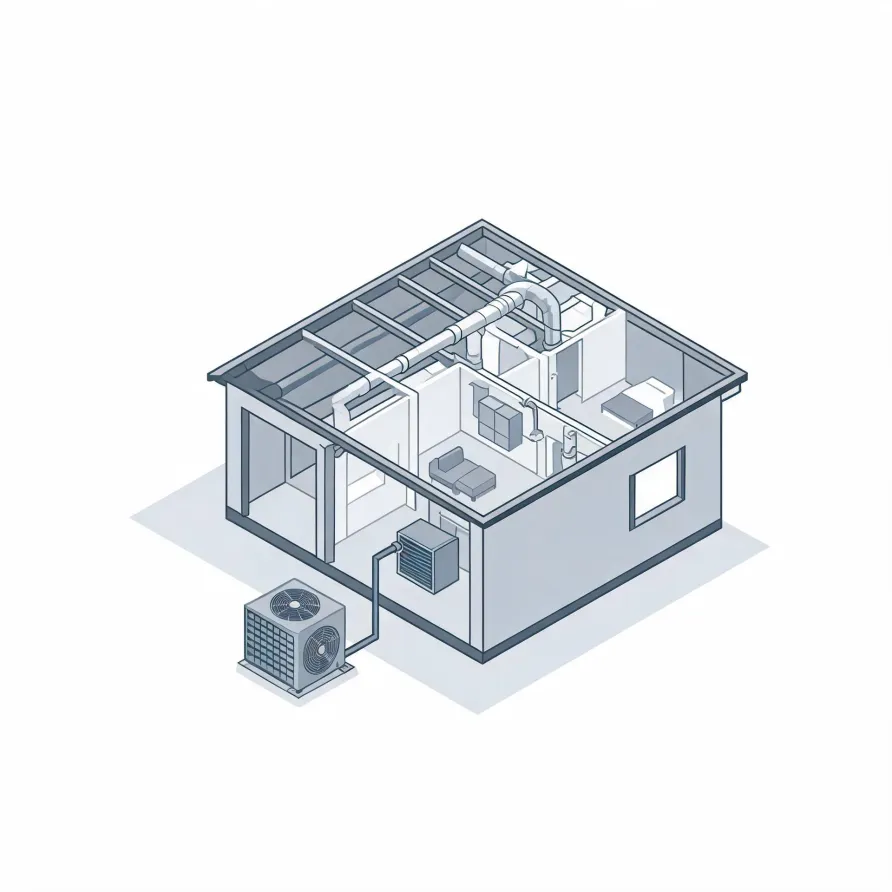
The outdoor condenser unit sits on a pad beside the house and holds the compressor and condenser coil, which do the core work of the system. Inside, the air handler mounts in a utility space, basement, or closet and pushes conditioned air through the home. These two units are the main equipment a contractor sets in place.
A copper refrigerant line set runs between the outdoor and indoor units, connecting them through an exterior wall. The thermostat goes on an interior wall where it can read the home's air accurately and give the homeowner a single point of control over the whole system.
The drawing shows a typical layout, and a licensed contractor determines exactly what applies to this house.
Get matched in Whatcom CountyWhatcom County, by the numbers
Half the homes in Whatcom County, Washington were built in 1989 or earlier (2020-2024 ACS 5-year).
U.S. Census Bureau, 2020-2024 American Community Survey 5-Year EstimatesWhatcom County, Washington holds 103,520 housing units (2020-2024 ACS 5-year).
U.S. Census Bureau, 2020-2024 American Community Survey 5-Year EstimatesOwners occupy 63.7% of the occupied homes in Whatcom County, Washington (2020-2024 ACS 5-year).
U.S. Census Bureau, 2020-2024 American Community Survey 5-Year EstimatesCodes & Standards Covering Central AC Installation in Whatcom County, Washington9 sourced rules and standards
What the installation actually looks like
Split-system central air conditioners rated below 45,000 Btu/h manufactured on or after January 1, 2023 must meet a federal minimum of 13.4 SEER2.
Split-system central air conditioners rated at or above 45,000 Btu/h manufactured on or after January 1, 2023 must meet a federal minimum of 13.4 SEER2.
Split-system central air conditioners manufactured between January 1, 2015 and December 31, 2022 had to meet 13 SEER, the metric that preceded SEER2.
Single-package central air conditioners manufactured on or after January 1, 2023 must meet a federal minimum of 13.4 SEER2.
Space-constrained central air conditioners manufactured on or after January 1, 2023 must meet a federal minimum of 11.7 SEER2.
Federal efficiency standards for split-system central air conditioners and heat pumps are set on each certified combination of outdoor unit and indoor coil rather than on the outdoor unit alone.
Residential and light commercial air conditioning and heat pump systems assembled in the field, including mini-splits and unitary systems, may not be installed on or after January 1, 2025 using a refrigerant with a global warming potential above 700.
A field-assembled system whose specified components were all manufactured or imported before January 1, 2025 carries no installation compliance date under the refrigerant restrictions and may still be installed.
What Whatcom County and Washington Require for HVAC Installation
Washington requires contractor registration rather than an HVAC licence: every contractor must register with the Department of Labor and Industries, and advertising, bidding or working as a contractor without that registration is a gross misdemeanour.