Tell us about the job
Takes about a minute. No obligation.
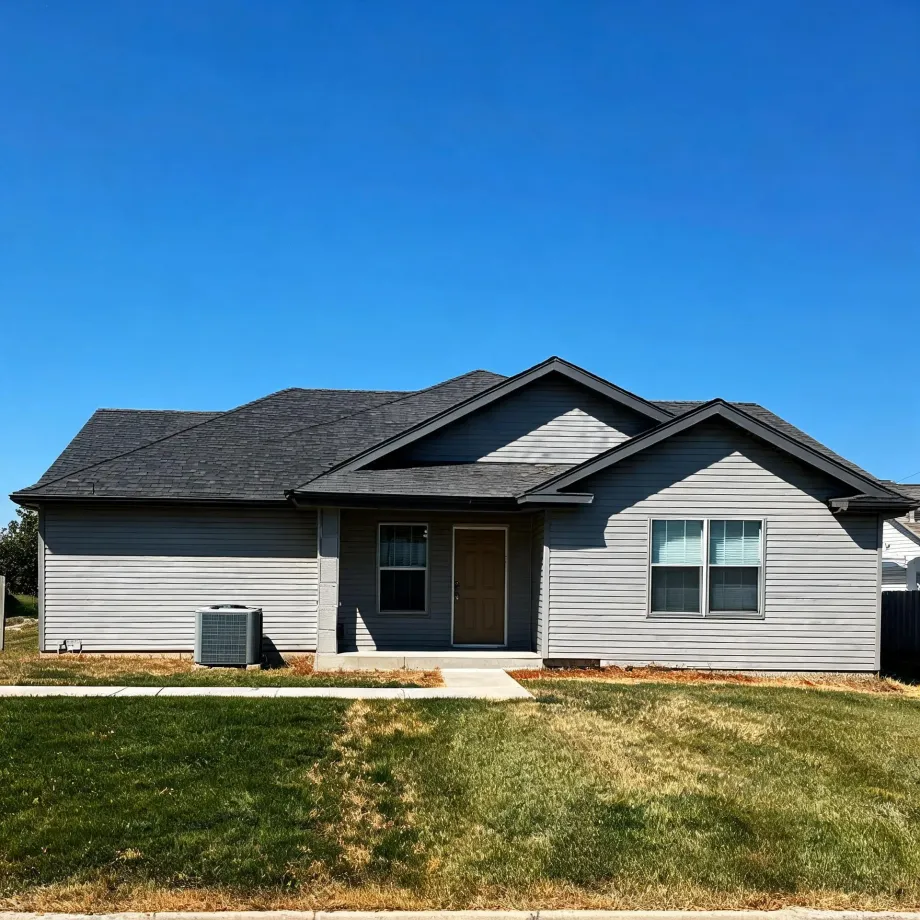
A central AC compressor in Columbia County earns its failures without the cooling season that usually explains them. Homes in Columbia County, WA have essentially no cooling season — no month of the year is warm enough to call for it. The compressor, the contactor, and the condenser fan have accumulated runtime for something other than summer heat, which means a contractor diagnosing a failed unit has to look past load and toward age, refrigerant state, and how long the system sat between calls. Idle equipment develops its own faults. Seals dry, contactors pit, and a system that never cycled hard can still arrive at the first warm day already broken.
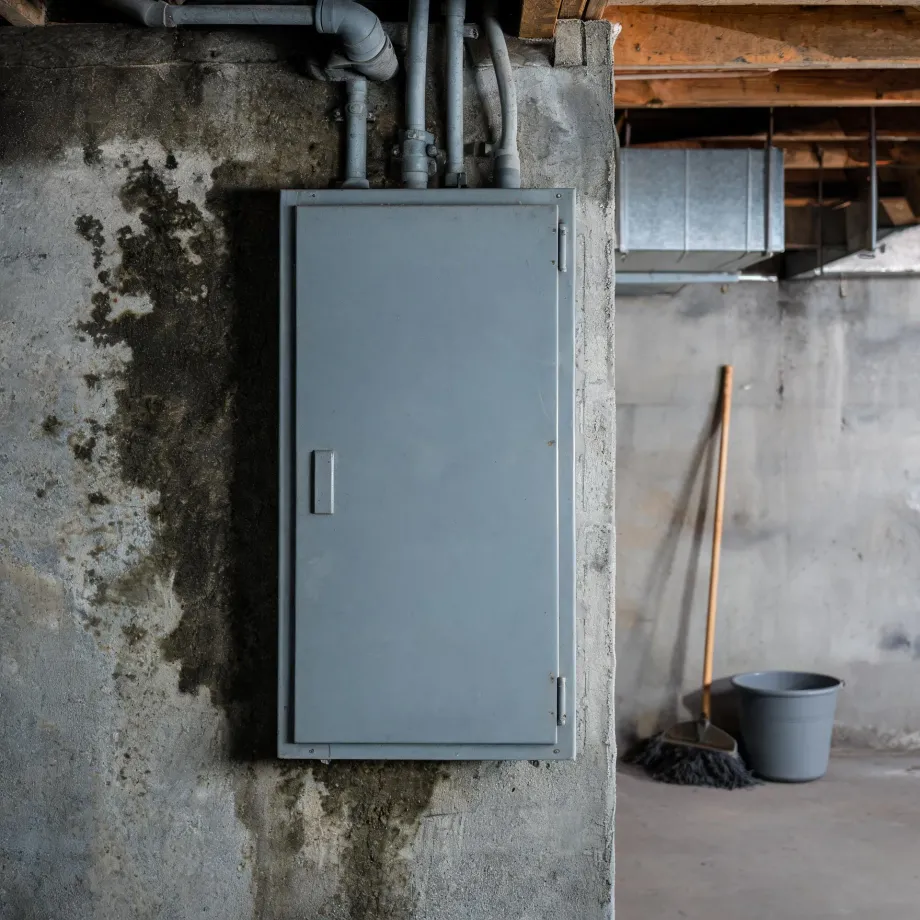
Half the homes in Columbia County, Washington were built in 1953 or earlier (2020-2024 ACS 5-year). That puts a lot of houses in this county on at least their second or third refrigeration system, which means the ductwork, the electrical connections, and the components inside the cabinet have been adapted rather than designed together. When a technician opens a unit here, what decides how the repair goes is whether the part that failed is still in production. Manufacturers stop making components for older equipment on a schedule that has nothing to do with how well the rest of the system runs, and a unit otherwise worth repairing can stall on a single unavailable part.
The Parts of a Central AC a Contractor Checks First
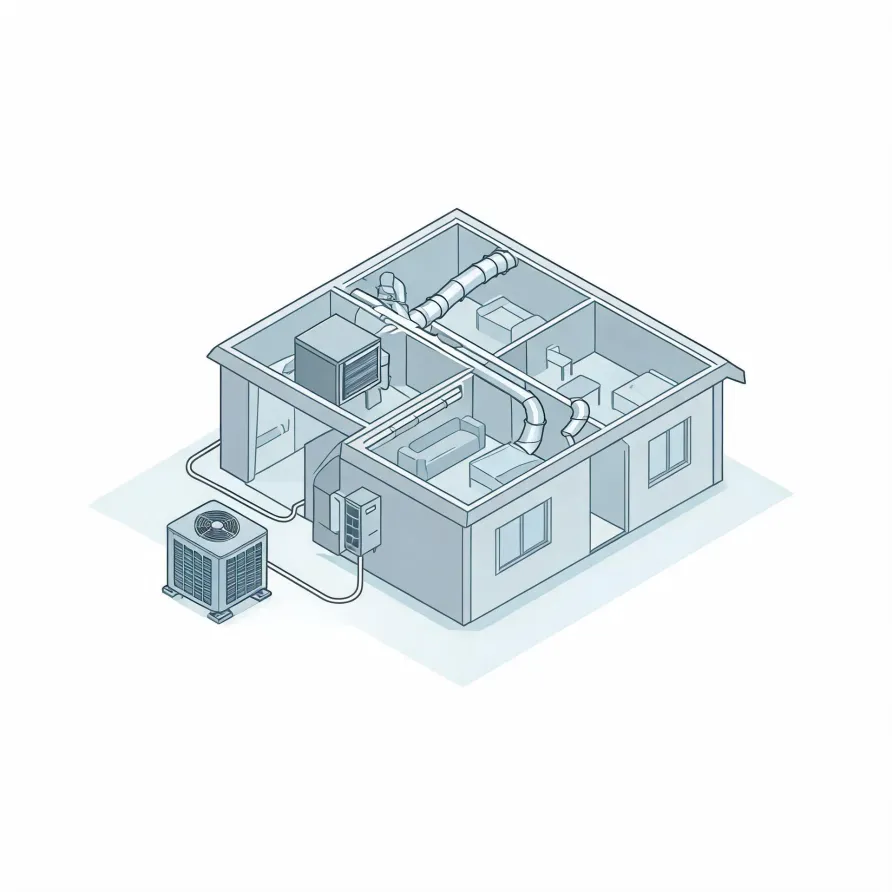
The outdoor condenser unit sits outside the house, usually against a wall or on a pad, and it is where the system sheds the heat it has pulled from inside. The indoor air handler or furnace blower sits in a basement, attic, or utility closet and pushes conditioned air through the house. When the system blows warm air, runs constantly, or stops altogether, one of these two units is where a contractor starts.
The evaporator coil sits inside the air handler and is where refrigerant absorbs heat from the air passing over it. The refrigerant lines connect the indoor and outdoor units, carrying refrigerant between them, and the thermostat tells the whole system when to run. A failing coil, a refrigerant leak, or a thermostat reading the wrong temperature each produce symptoms that point a contractor toward a specific piece.
The drawing shows the general layout of a central AC system, and a licensed contractor determines what applies to the specific equipment and configuration in your home.
Get matched in Columbia CountyColumbia County, Washington, by the numbers
67 severe weather events were recorded in Columbia County, Washington between 2015 and 2024.
NOAA National Centers for Environmental Information, Storm Events Database, bulk CSV export, events 2015-01-01 through 2024-12-31.Half the homes in Columbia County, Washington were built in 1953 or earlier (2020-2024 ACS 5-year).
U.S. Census Bureau, 2020-2024 American Community Survey 5-Year EstimatesColumbia County, Washington holds 2,217 housing units (2020-2024 ACS 5-year).
U.S. Census Bureau, 2020-2024 American Community Survey 5-Year EstimatesOwners occupy 77.7% of the occupied homes in Columbia County, Washington (2020-2024 ACS 5-year).
U.S. Census Bureau, 2020-2024 American Community Survey 5-Year EstimatesRules & Standards Behind Central AC Repair in Columbia County, Washington9 sourced rules and standards
What HVAC Repair Looks Like in Columbia County
Split-system central air conditioners rated below 45,000 Btu/h manufactured on or after January 1, 2023 must meet a federal minimum of 13.4 SEER2.
Split-system central air conditioners rated at or above 45,000 Btu/h manufactured on or after January 1, 2023 must meet a federal minimum of 13.4 SEER2.
Split-system central air conditioners manufactured between January 1, 2015 and December 31, 2022 had to meet 13 SEER, the metric that preceded SEER2.
Single-package central air conditioners manufactured on or after January 1, 2023 must meet a federal minimum of 13.4 SEER2.
Space-constrained central air conditioners manufactured on or after January 1, 2023 must meet a federal minimum of 11.7 SEER2.
Federal efficiency standards for split-system central air conditioners and heat pumps are set on each certified combination of outdoor unit and indoor coil rather than on the outdoor unit alone.
Residential and light commercial air conditioning and heat pump systems assembled in the field, including mini-splits and unitary systems, may not be installed on or after January 1, 2025 using a refrigerant with a global warming potential above 700.
A field-assembled system whose specified components were all manufactured or imported before January 1, 2025 carries no installation compliance date under the refrigerant restrictions and may still be installed.
What Columbia County, Washington Requires for This Work
Washington requires contractor registration rather than an HVAC licence: every contractor must register with the Department of Labor and Industries, and advertising, bidding or working as a contractor without that registration is a gross misdemeanour.
Severe Weather Events in Columbia County
Extreme weather puts real hours on HVAC equipment, and Columbia County's climate is its own. A system that runs hard through local conditions will show that wear differently than one elsewhere.
67 severe weather events, 2015–2024. Source: NOAA National Centers for Environmental Information, Storm Events Database.