Central AC or mini split for a Washington home

A local pro who knows air conditioners gets your details and gets in touch.

Step 1 of 3: Equipment

Either one works here, and the right choice usually comes down to what you already have. If ductwork runs through your house, central AC uses it and cools every room at once from a single thermostat. If you don't have ducts, or you're cooling a room or two that never gets comfortable, a mini split handles that without the cost of adding ductwork. Washington summers run warm but not humid, so you're not asking the system to wring moisture out of the air the way homes in muggier states do, which means either system can keep up without working as hard. Since most homes here heat with electricity, a mini split can double as that room's heat for the shoulder months, which central AC can't do. If you're replacing a system you already have, matching what's there is usually simplest. If you're adding cooling somewhere new, that's where a mini split tends to make more sense.

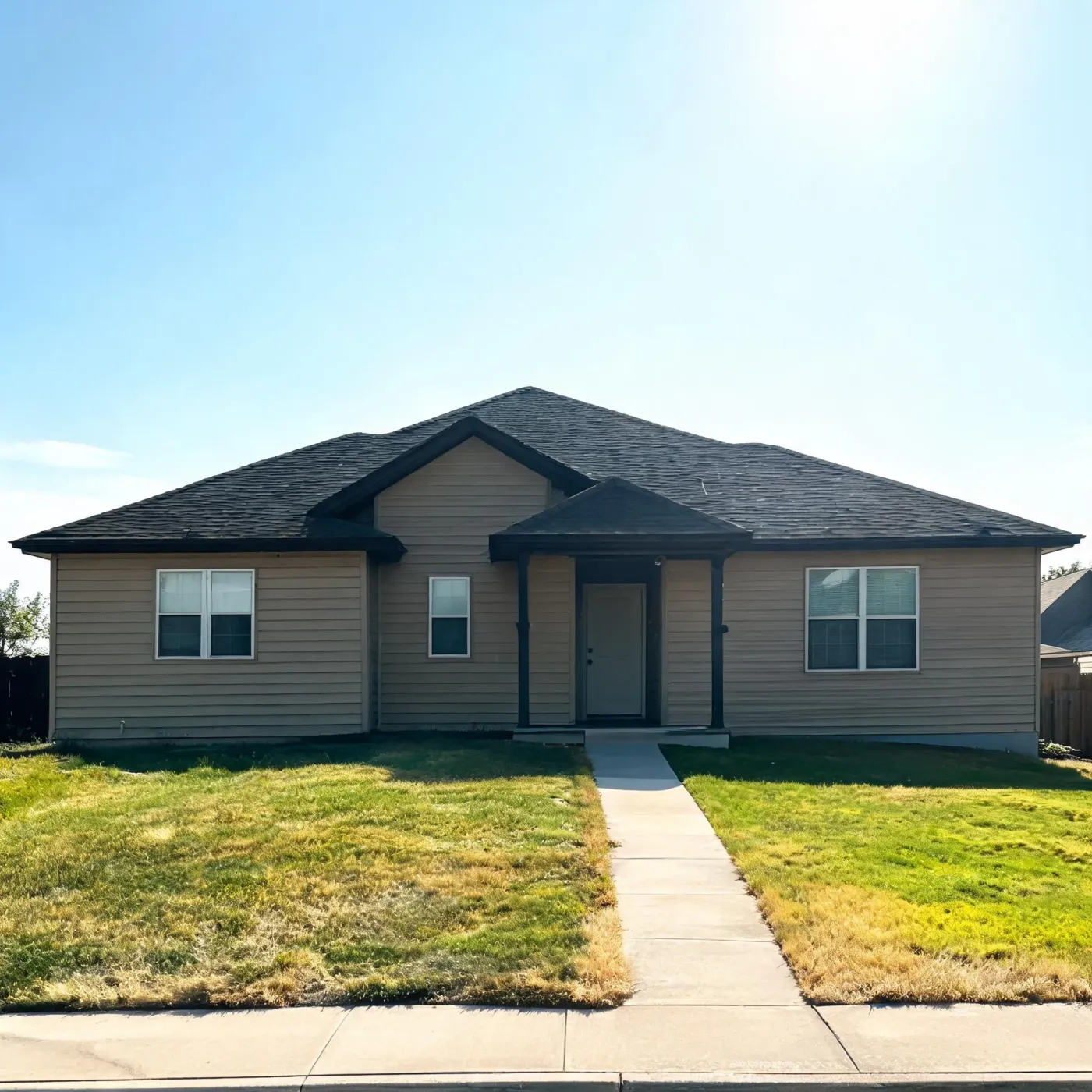
Single-story house with tan horizontal siding and a dark shingled hip roof, fronted by a patchy green and brown lawn and a concrete walkway leading to the covered entry.

A 53°F dew point is what you've got here through June, July and August, averaged across homes in Washington. That's dry air as summer goes. Your air conditioner isn't fighting moisture the way one would in a muggy climate, so it doesn't run as long to get a room comfortable, and the house doesn't get that clammy feel when the thermostat still reads where you set it. Whichever system you land on, central or mini split, it's working against heat alone, not heat and humidity both. That matters more for sizing than for picking between the two, but it's worth knowing going in: a unit sized for a wetter place would be doing work your air doesn't need done.

NASA POWER T2MDEW county cells weighted by homes

A woman in a cream cardigan and jeans stands with one hand raised facing an open front door of a gray horizontal-siding house, with a black lantern wall light, a potted shrub with yellow flowers, and a stone-faced porch column.

What your house already has decides this

If your home has ducts running to every room, think about why you'd rip that out to install something else. Central AC uses what's already behind your walls and under your floors. A mini split skips ductwork entirely, which matters most if you're cooling a converted attic, a garage, or an addition that was never tied into the rest of the house.

Electric heat is common here, and if your furnace or air handler shares ductwork with your cooling system, central air is the simpler path. A mini split makes more sense room by room, when you want one part of the house cold and don't care about the rest. Either way, the install is different work with different equipment, and getting matched with a contractor who handles the one you actually need means you're not explaining your situation twice.

A living room corner with a beige upholstered armchair holding navy and striped cushions, a small round wooden side table with a carved bowl and a potted green plant, a framed landscape picture on a pale wall, built-in shelving, and a curtained window.
A dim bedroom with an unmade bed beside a window holding a box fan, with sheer curtains, a lamp at right and a large blank wall at left.

The box fan in the window is just moving the heat around at this point. It's almost nine and still light out, that long June evening light, and the upstairs bedroom hasn't let go of the day's warmth. You've got the window up as far as it goes. The fan rattles against the frame, pulling in air that's not much cooler than the air already in the room. Dry heat, no mugginess to it, but heat all the same, sitting up here where it always settles first. Down the hall a door is cracked open, a nightlight on. You'll check again in an hour, see if the room's dropped at all, and probably move the fan closer to the bed before anyone can fall asleep in it.

Why does the upstairs stay warm after the AC's been running all day?

If one room never catches up, your ducts probably can't get enough air to it. A single trunk line feeding a long run upstairs will lose pressure before it reaches the far bedroom, so that room lags behind the rest of the house no matter how long the system runs. You might also notice the thermostat says it's satisfied downstairs while upstairs is still warm, or that the vents up there barely push any air compared to the ones below. None of this means the unit is failing. It means the ducts were sized for the house as it was, not for how you're using it now. Left alone, the fix is usually just running the system longer and paying for air you're not actually getting.

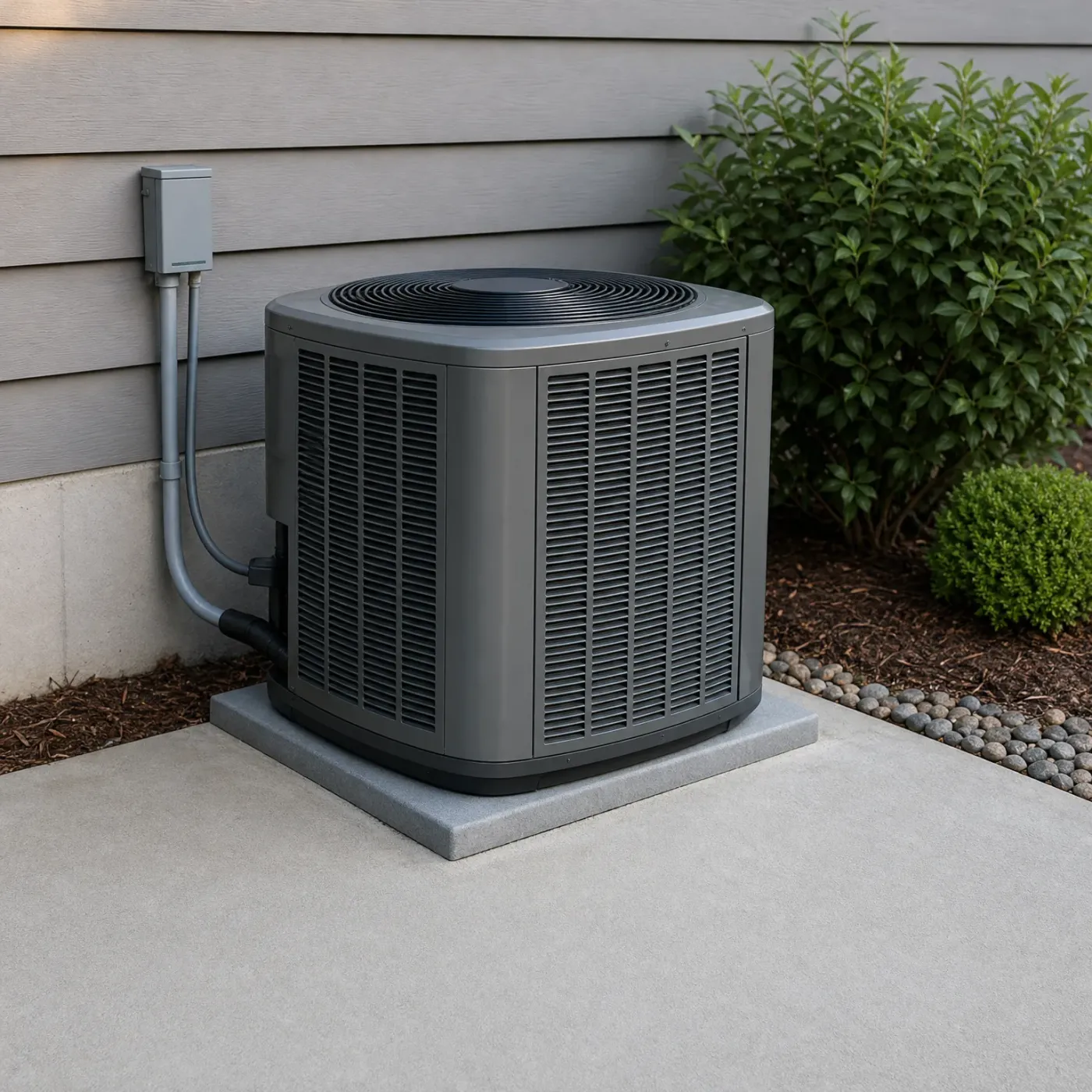
A gray outdoor air conditioner condenser unit on a concrete pad beside a house with horizontal lap siding, with a wall-mounted disconnect box and conduit at left and a green shrub and mulch bed at right.

Central AC, running right

This is what a healthy system looks like: a condenser on its pad, conduit running clean to the disconnect, nothing straining. Cool air reaching every room off one thermostat, no window units, no warm upstairs. If your ducts are already there and sound, this is what you're buying back.

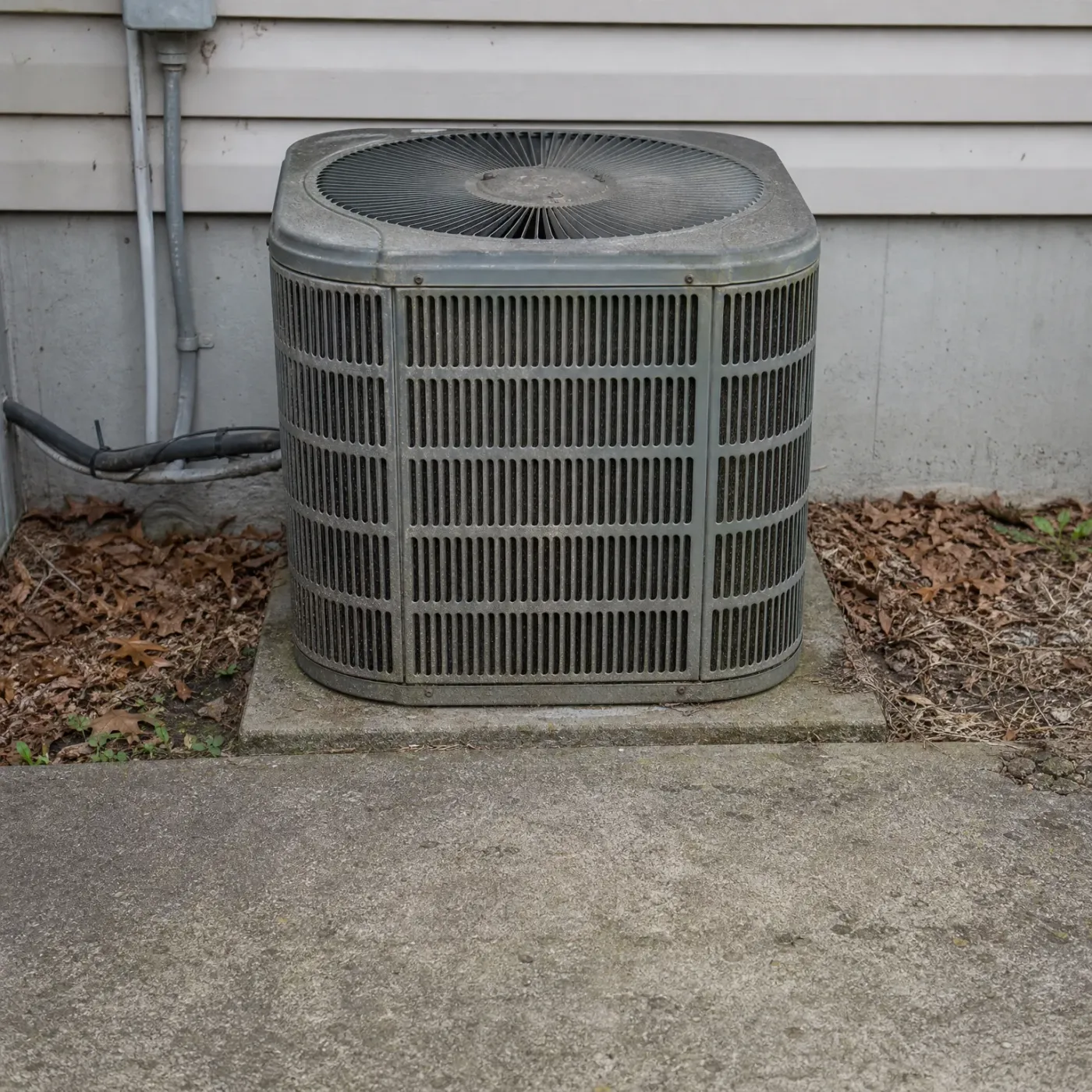
An outdoor air conditioner condenser unit on a concrete pad beside a house with horizontal lap siding, with a conduit running to a gray electrical disconnect box on the wall.

When central AC falls short

Same setup, but the signs are different. A unit that runs long on a mild day, or a house where one room never cools, usually points to ducts that can't move enough air, not the condenser itself. That's when a mini split for the problem room gets weighed against fixing what's already there.

An older woman with gray hair in a bun and glasses, wearing a beige knit sweater, smiles while looking to the side in a warmly lit kitchen, with a loaf of bread on the counter in the foreground and a snowy scene outside the window.
A woman and a sleeping child wrapped together in a cream knitted blanket on a couch, with a potted plant, framed photo and lit lamp in the background.

A pro who works on air conditioners

You've read what separates central AC from a mini split, and your house has probably already told you which one fits. What's left is getting the install done right, and that's a different job depending on which way you go. Central AC means matching a condenser to the ducts you've got, or extending them if a room's never had one. A mini split means figuring out how many heads you need and where the line sets can run without tearing into finished walls. Either way, someone has to size the equipment for your house, not just your square footage. Electricity's cheap here, so the install matters more than the monthly bill ever will. Send the request and let a contractor who knows Washington installs sort out which system earns its keep in your house.

What cheap electric power changes

Washington runs mostly on electric heat, and power here is priced low enough that it changes the math on this decision. A mini split's real advantage in most states is cutting a cooling bill down from what a straight electric resistance setup would run. Here that gap is smaller, because the electricity itself costs less to begin with. Central AC loses less of its usual edge too, since the fan and compressor draw from the same cheap supply. Neither system is working against an expensive utility bill the way it would elsewhere, so the choice comes down less to running cost and more to what your house is already built to use.

Dry air means smaller equipment

A 53°F dew point through summer means the load on either system is mostly sensible heat, not moisture. That matters for sizing. An oversized central AC or mini split in a humid state gets oversized partly to handle moisture removal, and it short cycles because of it, never running long enough to dehumidify properly. In Washington that pressure doesn't exist. A contractor sizing your system here is sizing mostly for temperature, which means less risk of landing on equipment that's bigger than your house needs. Right-sized equipment, central or ductless, runs longer and steadier instead of kicking on and off.

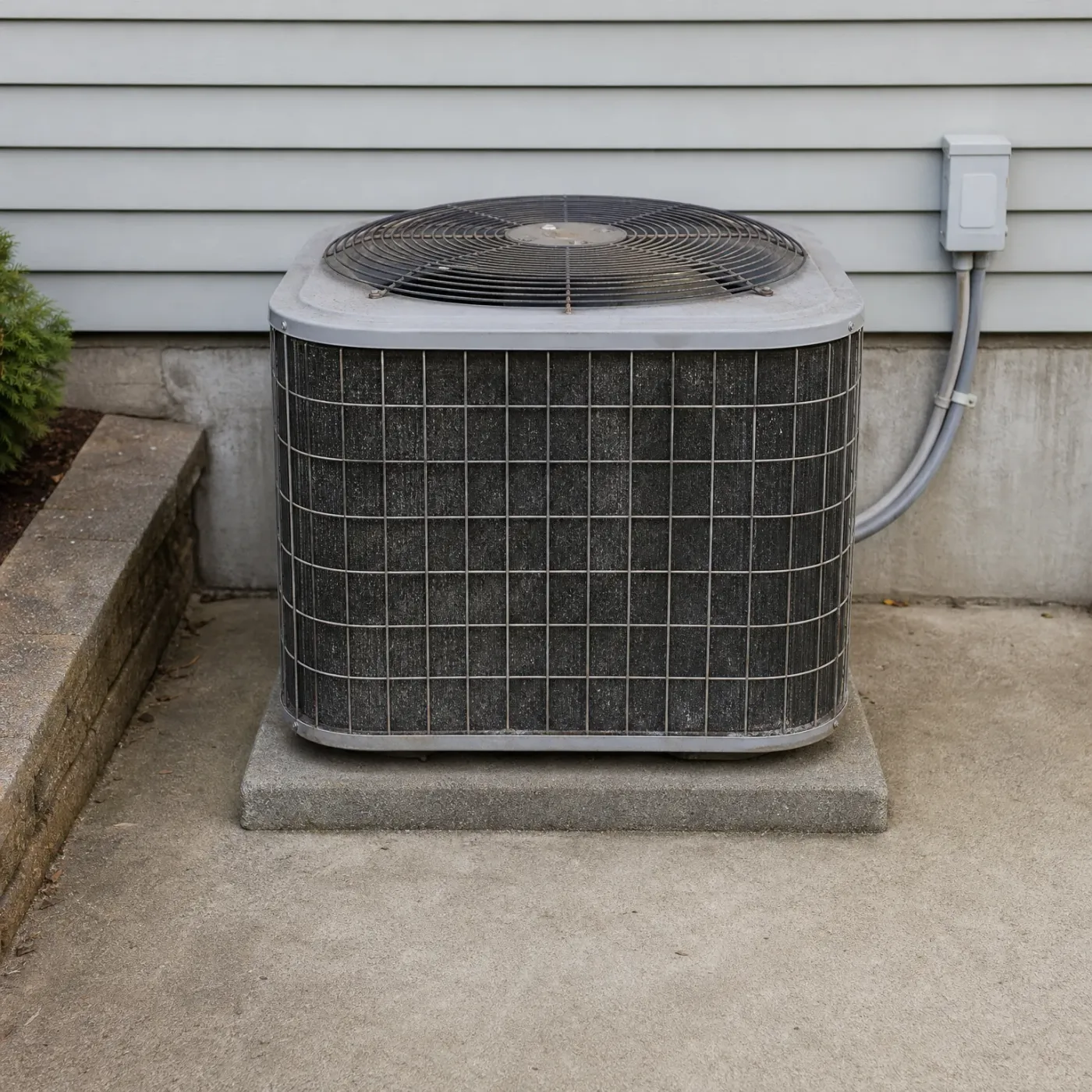
An outdoor air conditioning condenser unit on a concrete pad beside a house with horizontal siding and a concrete foundation, with dry brown leaves on the ground to either side.
Before you get your air conditioner installation
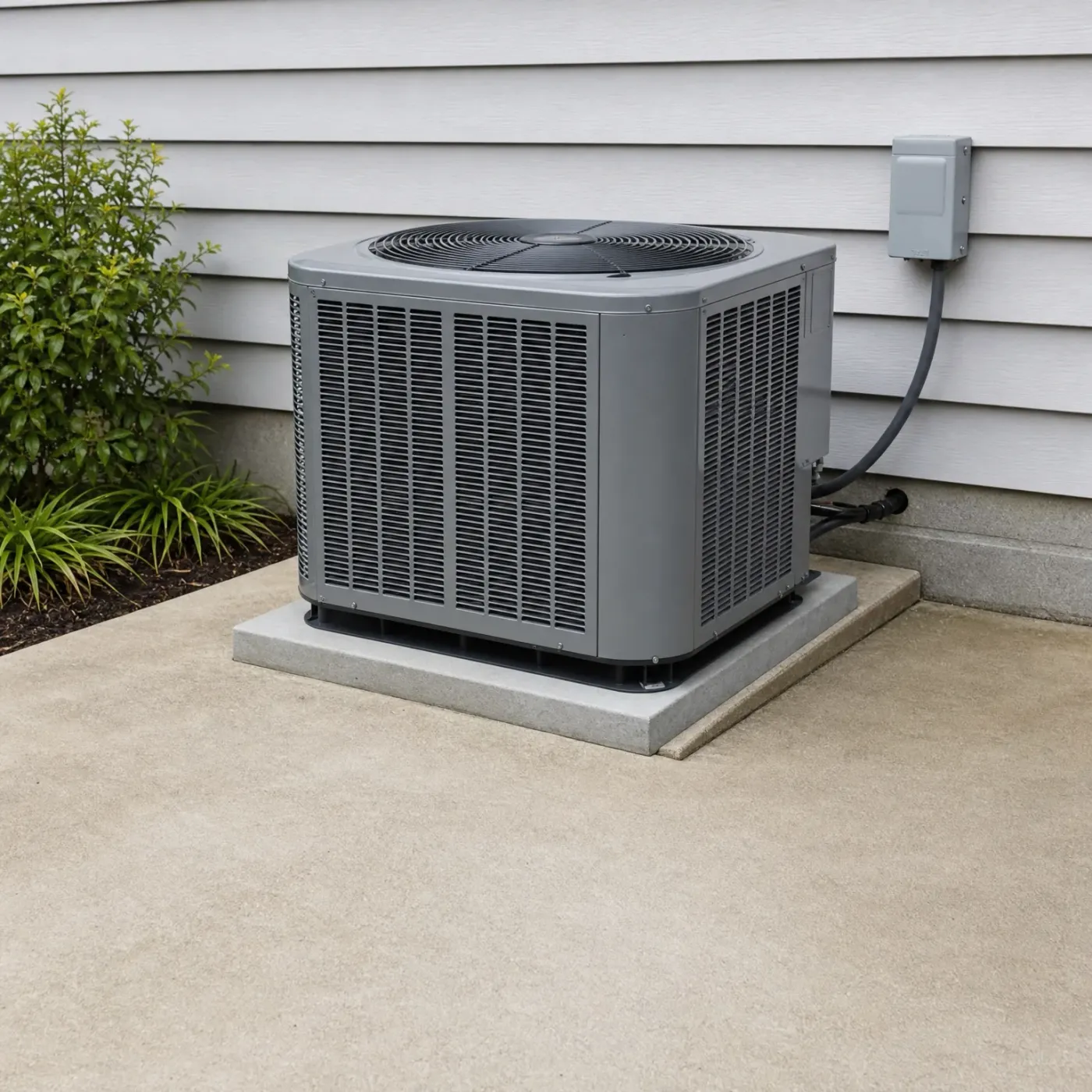
A gray outdoor air conditioning condenser unit on a concrete pad beside a house with horizontal lap siding, with a wall-mounted disconnect box and conduit, and shrubs to the left.
After you get your air conditioner installation

One thermostat, every room

If your house already has ducts, central AC uses them. Set the thermostat once and every room gets cool air, no units in windows, no juggling rooms.

Get an air conditioner pro

No ductwork needed

A mini split skips the ducts entirely. It fits a home that doesn't have them, or cools the one or two rooms that actually run hot.

Get an air conditioner pro

How does a mini split actually cool a room without ducts?

You keep seeing mini splits mentioned as the no-duct option, but it's not clear how one gets cool air into a room on its own. If your house doesn't have ductwork, or the room you're trying to fix is an addition that was never tied into it, you want to know what's actually happening on the wall before you commit to cutting a hole in it.

It cools the room directly, with the indoor unit doing the job ducts would otherwise do

The indoor unit mounted on the wall holds a small coil and a fan. Refrigerant lines run from it through a hole in the wall to a condenser outside, the same refrigerant cycle a central system uses, just compressed into one room. The fan pulls air from that room across the cold coil and pushes it right back out into the same space. No ducts carry it anywhere. That's why placement matters more than it does with central air: the unit cools the room it's in, so it has to go somewhere that lets the air reach the whole space, not tucked behind a doorway or furniture where it's blowing into a corner.

  1. Refrigerant inside the lineset absorbs heat from the indoor air

  2. Central AC pulls that heat through the coil into the condenser outside

  3. A mini split's indoor head sends the same heat to its outdoor unit

  4. The compressor pressurizes refrigerant so it can release heat outdoors

Power costs 13.17 cents per kilowatt-hour statewide

At 13.17 cents a kilowatt-hour, running either system costs less here than in most states. That matters more for central AC, since it cools the whole house off one thermostat, than for a mini split cooling a room or two. Cheap power narrows the gap between them.

EIA-861 2025 statewide residential average

A woman with long wavy brown hair in a grey ribbed sweater sits on a couch indoors, looking toward a window, with a potted palm-like plant and fireplace behind her.
A woman with long brown hair wearing a green V-neck top and beige cardigan sits on a light sofa, looking off to the side, with a dining table, lamp and framed picture in the background.
A woman with long dark hair in a cream knit sweater sits on a beige sofa indoors, looking toward a bright window with a houseplant and framed picture in the background.
A woman with long dark hair in a green knit sweater sits on a couch indoors, smiling and looking toward a window with a blurred room behind her.

Your House Already Answered This

  • Ducts already in the house point to central AC; no ducts, or just a room or two to cool, points to a mini split.
  • Washington's dry summer air means neither system has to work hard against humidity to get a room comfortable.
  • Cheap electric power here narrows the running-cost gap between the two, so the choice comes down to your house, not your bill.
  • A long duct run that leaves an upstairs room warm is a sign the ductwork needs attention, not a reason to rule out central air.
  • Once you send the form, a contractor who installs the system you need takes it from there.
  • Matching the equipment to what your house already has saves you from tearing out or adding ductwork you don't need.

Central AC or a mini split comes down to what's already behind your walls. Ducts running to every room mean central air uses what's there and cools the whole house off one thermostat. No ducts, or just a bedroom or office that never cools right, and a mini split handles that without tearing into your walls. Washington's summer air is dry, so whichever system you install, it isn't fighting moisture to get a room comfortable, and electric power here is priced low enough that running cost stops being the deciding factor either way. An upstairs room that stays warm all summer isn't a reason to give up on central air. It usually means a duct run losing pressure before it reaches that far, and that gets fixed, not replaced with a different system.

What's left is matching the equipment to the house you actually have, and that's a job for someone who can look at your ductwork, your electrical panel, and the room you're trying to fix before recommending anything. Guess wrong and you've paid to tear out ducts you didn't need to touch, or added a mini split head to a house that had everything it needed already. Send the form and a contractor who installs both systems takes over from there. Finding the right person for this stops being your problem the moment you do. You've already got what matters most, which is knowing which way your house points. The rest is getting the install done by someone who won't need to guess at it.

Sunlight falls across a beige upholstered sofa with a textured woven cushion and a chunky knit throw, beside a dark wood cabinet holding a ceramic vase with green leafy branches, near a white-framed window.
A sunlit corner of a room with a wooden side table holding a ceramic vase of green foliage and a wooden bowl, beside a light upholstered sofa with a knit throw and rust-colored pillow, with window shadows cast on a beige wall.
A sunlit room corner with beige walls, a white-framed window with sheer cream curtain, wood floor with a light rug, and a woven basket holding a knit blanket.
A beige ceramic vase holding a leafy green branch sits on a wooden cabinet in a corner, with sunlight through a sheer curtain casting leaf shadows on the wall.
A grey upholstered sofa with a rust-orange velvet cushion and a textured throw sits beside a window with linen curtains, next to a wooden side table holding a pale ceramic vase of olive branches.

The right pro for this job

After this form, you can stop searching for an air conditioner pro.

Connect with a pro

Sending the form costs nothing.