
How to lower your AC bill in a Washington summer

Send the form, and lining up the air conditioner tune-up stops being yours to chase.

Hand off the search

What's the best way to lower my AC bill in Washington this summer?

You're not expecting a huge bill since Washington summers don't get brutally hot, but you'd still rather not pay more than you need to for cooling. You're looking a season out, before the heat sets in, wanting to know what actually moves the needle on the bill rather than small habits that barely matter.

Have the AC serviced before summer starts

A dirty coil or a low refrigerant charge makes the unit run longer to cool the same space, and that's what shows up on the bill. Maintenance catches that before the heat arrives, while a tech can still clean the coil, check the charge, and make sure the airflow is where it should be. Washington summers don't put the same strain on an AC that you'd see in a hotter state, so most units here aren't fighting the heat for months at a stretch. That means a unit running inefficiently often goes unnoticed longer, since it still manages to cool the house, just at a higher cost. A seasonal check-up is what catches that gap before it adds up.

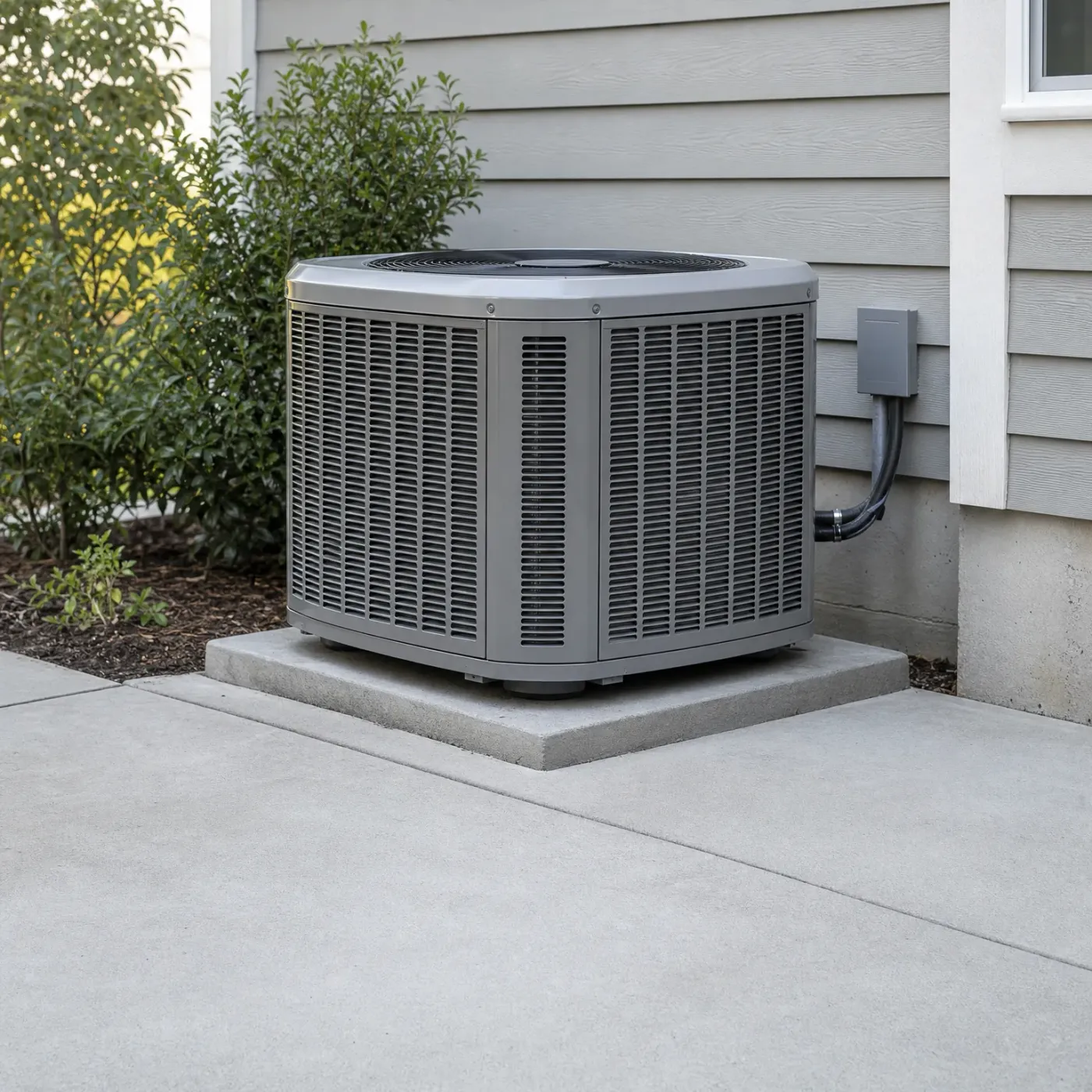
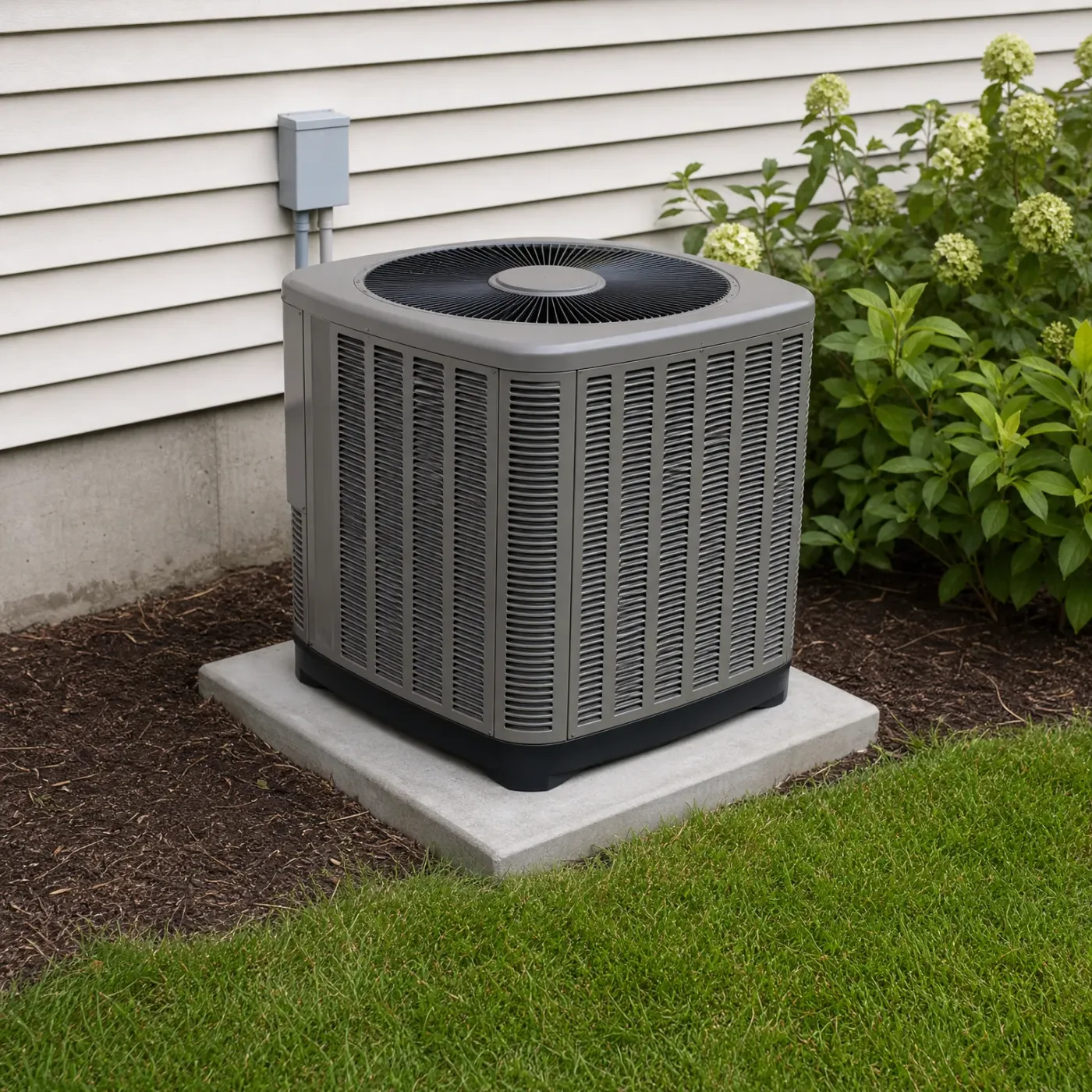
A gray outdoor air conditioner condenser unit on a concrete pad beside a house with horizontal vinyl siding, surrounded by mulch, flowering shrubs, and lawn.

Clean coil, running efficiently

Air moves through the fins without resistance, so the system pulls heat out of your house and sheds it outside the way it's supposed to. The compressor doesn't have to run as long to hit the temperature on your thermostat. That shorter run time is what shows up as a lower bill.
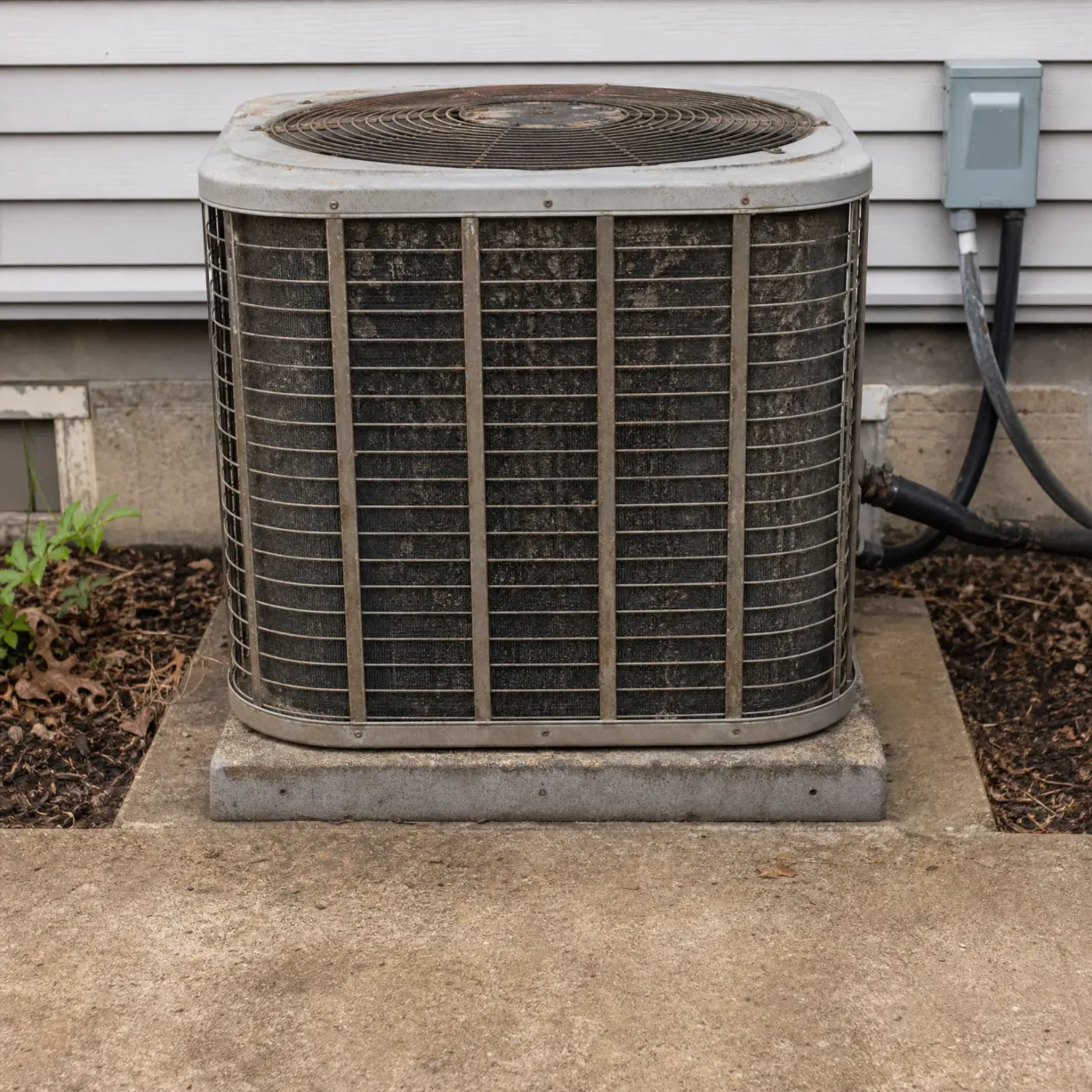

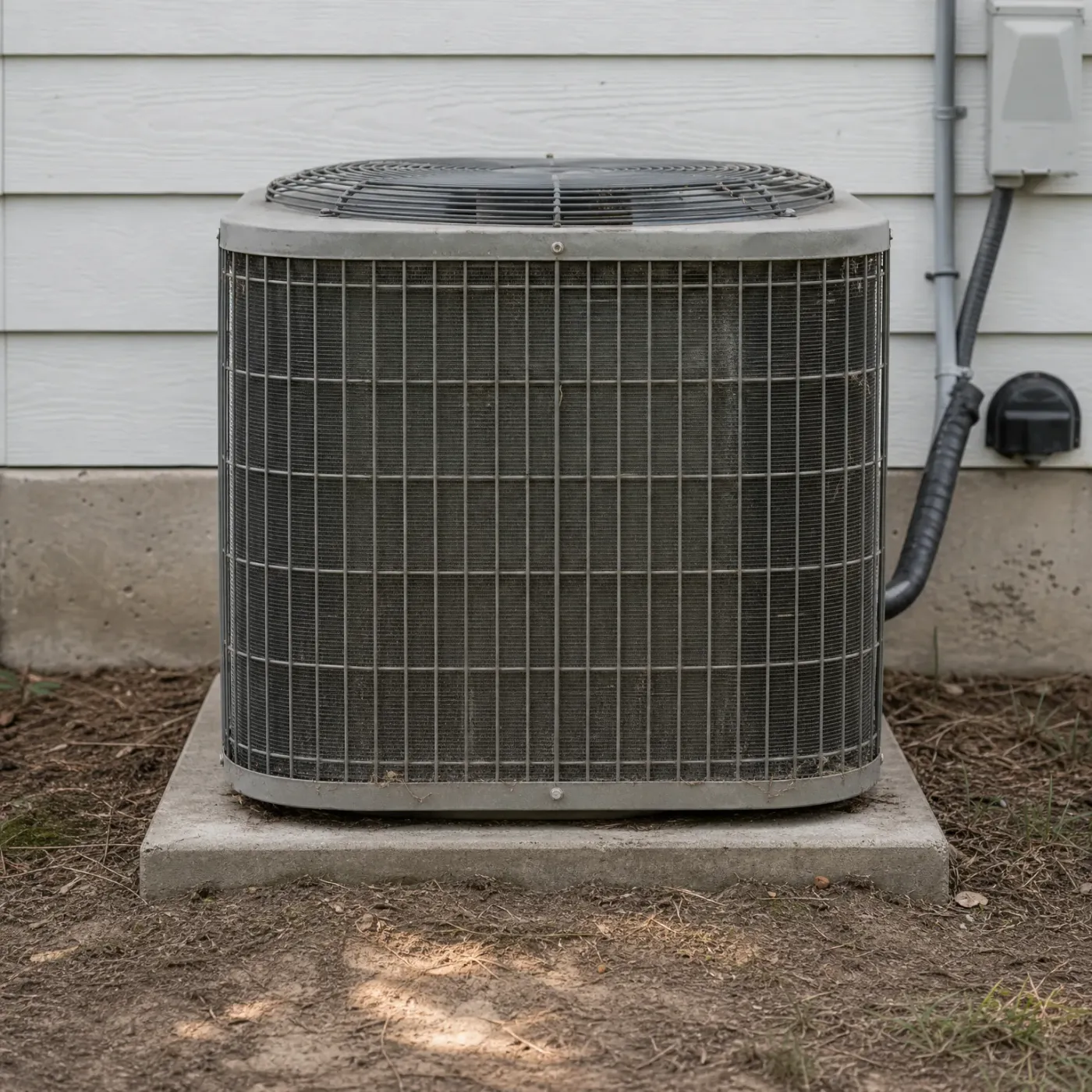
A weathered outdoor air conditioning condenser unit on a concrete pad beside a house with light horizontal siding, an electrical disconnect box and conduit on the wall, and mulched soil on either side.

Coil caked with grime

Dirt and yard debris packed into the fins block airflow, so heat has nowhere to go. The unit runs longer to do the same job, and parts like the compressor take the strain. Left alone through a summer, a coil like this can push a system toward a breakdown instead of just a higher bill.

Why does your AC bill creep up even in a mild summer?

You might notice the system running longer than it used to, even though the afternoons here never get that hot. Maybe the air coming out of the vents feels less cold than it did last July. Maybe you hear it cycling on more often, or it runs for a stretch and shuts off sooner than before. None of that is dramatic. It's the kind of thing you only catch because you're paying the electric bill and watching the number move up a little each month without a reason you can point to. Left alone, a system working harder than it needs to keeps drawing more power every time it runs, and that's the part that shows up on the bill long before anything breaks.

  1. A tech checks the refrigerant charge against what your system calls for.

  2. The outdoor coil gets washed clean of dirt, pollen and grass clippings.

  3. The indoor coil and blower wheel get inspected and cleaned if needed.

  4. The capacitor gets tested, since a weak one makes the compressor work harder.

Skip Maintenance or Schedule a Tune-Up

Skip maintenance

  • A dirty outdoor coil makes the compressor run longer to pull the same heat out of your house, and that longer runtime shows up on your electric bill.
  • If the refrigerant charge is off, you won't see it, but the system works harder all summer to hit the temperature on your thermostat.
  • A weak capacitor can let the compressor struggle to start each cycle, and a struggling start draws more power than a clean one.
  • Small problems like these don't usually cause a breakdown right away, so the system keeps running, just less efficiently, for months.
  • You pay for that lost efficiency every billing cycle without any clear sign of what's causing it.

Schedule a tune-up

  • A tech checks the refrigerant charge against what your system calls for, so the compressor isn't working against a level that's too low or too high.
  • Washing the outdoor coil clean lets it shed heat the way it's designed to, which shortens how long the compressor has to run.
  • Testing the capacitor catches a weak one before it makes the compressor draw more current just to start.
  • Cleaning the indoor coil and blower wheel keeps air moving through the system without resistance.
  • A local contractor who services this equipment every summer knows which of these usually goes first in a system like yours.
  • Getting matched with one licensed contractor means one visit and one set of answers, not several companies calling about the same job.
A man in a blue sweatshirt reclines with closed eyes in a brown leather armchair in a living room with a bookshelf, houseplant, sofa, window, and a side table holding newspapers and a dark mug.
A bearded man in a gray pullover reclines with closed eyes on a brown leather sofa in a sunlit room with a window, framed picture, potted plant, and a wooden cabinet holding papers and a dark mug.
A man in a gray sweater leans back with closed eyes in a brown leather armchair beside a wooden side table holding a dark mug and a folded newspaper, with bookshelves and a window seat behind him.
A man in a green sweater reclines in an armchair with his eyes closed and a slight smile, beside a window with plants, a small table holding a mug and folded newspaper, and bookshelves behind him.

Stop chasing an air conditioner pro

You don't want to spend a Washington summer tracking down someone to service a system that's running fine for now but creeping up on your bill. A tech who works on AC systems in your area all summer has seen which parts fail first in homes like yours and checks those without guessing. Send the request and it goes to one licensed contractor local to you, not a handful of companies competing for the job, so you're not stuck fielding calls while you decide. From there, finding someone to look at your system stops being something you have to manage. You can get back to your week while that part gets handled, and know the coil, the charge and the capacitor are getting looked at by someone who does this work every season, not once in a while.

How your AC actually cools the house

  • The thermostat senses room temperature and signals the outdoor unit to start a cooling cycle through a low-voltage wire.
  • A contactor in the outdoor unit closes to send power to the compressor, which pressurizes refrigerant and sends it through the system.
  • Refrigerant absorbs heat from the air inside your house at the indoor coil, then releases that heat outside at the condenser coil.
  • The blower motor pushes air across the indoor coil and through your ducts, so a slow or dirty blower makes the whole cycle take longer.
  • The compressor shuts off once the thermostat reads the set temperature, and a short cycle time means the system isn't straining to keep up.
  • A low refrigerant charge forces the compressor to run longer to move the same amount of heat, even though nothing about the house changed.

Your thermostat is just a switch. Once the room warms past the temperature you set, it sends a low-voltage signal out to the unit sitting outside your house. That signal closes a contactor, which is the part that lets full power reach the compressor. The compressor's job is to pressurize refrigerant and push it through a loop of copper tubing that runs between the coil inside your house and the coil outside.

Inside, that cold refrigerant pulls heat out of the air your blower is pushing past the indoor coil. The same refrigerant then carries that heat outside and dumps it at the condenser coil, where the outdoor fan blows it away. Once your house reaches the temperature on the thermostat, the compressor shuts off and the cycle stops until the room warms up again.

That whole loop depends on two things moving the way they're supposed to: the air and the refrigerant. If the blower is slow or the filter is clogged, less air crosses the indoor coil, so each cycle takes longer to pull the same heat out of the house. If the refrigerant charge is low, the compressor has to run longer to move the same amount of heat it used to move faster. Either way, the thermostat still reads the same number when it's done, but the compressor has worked harder to get there. That extra runtime is what shows up on your bill, even on a summer that never gets especially hot.

An outdoor air conditioning condenser unit on a concrete pad beside a house with horizontal lap siding, with a conduit and electrical disconnect box on the wall at right.
Before you get your air conditioner maintenance
A gray outdoor air conditioner condenser unit on a concrete pad beside a house with horizontal lap siding, with a wall-mounted disconnect box and conduit to its right and shrubs to the left.
After you get your air conditioner maintenance
A two-story house with light beige horizontal siding, a gabled roof, a small covered front porch with dark door, and shrubs along the foundation, set behind a mown lawn and wet sidewalk with large leafy trees on both sides.

Washington summers don't get the thick, sticky air you'd feel further south. The dew point averages 53°F across June, July and August, which is on the dry side as these things go. That matters for your air conditioner because a system pulling moisture out of dry air doesn't have to work as hard as one fighting humidity. But it also means the heat you do feel is doing most of the work on your bill, and a dirty coil or a weak charge still makes the compressor run longer than it needs to. Lower humidity won't cover for a system that isn't maintained.

NASA POWER T2MDEW county cells weighted by homes

A gray-haired man with a beard in a blue button-placket shirt reclines on a couch with his eyes closed, beside a sunlit window with a green plant.
A woman in a cream knit sweater sits in an armchair with her eyes closed near a window showing yellow autumn foliage, with a mug on a round wooden side table beside her.

A clean coil and a correct refrigerant charge keep your compressor from running longer than it has to, and that's what keeps your bill where it should be for a mild Washington summer. That's the whole answer. A tech who services AC systems around here all summer knows which part usually goes first on a system like yours, whether it's a weak capacitor or a coil caked with pollen, because he's pulled the panel off dozens of them this season alone. You'll get matched with one local contractor, licensed to do this work, not a handful of companies competing for your callback. No crews showing up at your door, no juggling quotes. Just someone who knows this equipment, coming to look at yours. Once you send the request, that part is off your plate. You've got the information now. What's left is getting someone out to look at the system before July asks more of it than it's built to give.

An outdoor air conditioning condenser unit on a concrete pad beside a dark stucco wall, with gravel bedding, shrubs, an ornamental grass clump, and a lawn in the foreground.

Send one request and you're done looking

The pro who reaches out is licensed in Washington.

Step 1 of 3: Equipment