Say what's going on with your air conditioner, and a pro who works on them reaches out.
Summers in Washington don't put the same load on an air conditioner that they do in places with heavy, wet air. Most days the system isn't working hard, and a two-stage unit spends most of its time running on the lower stage, moving less air, using less power. That matters here more than people expect, because a single-stage AC only knows on and off at full blast, even on a mild afternoon when the house doesn't need that much.
Electricity here is cheap and most homes heat with it, so people watch the summer cooling bill less closely than they would somewhere the power rates run high. That changes the math on a two-stage system. It still runs quieter and holds a steadier temperature through the house, but the case for it in Washington rests more on comfort and equipment wear than on a dramatic drop in your power bill.
Whether it's worth it for your house depends on things a page can't know: the size of your home, your current system's age, how your ductwork is laid out. That's the kind of judgment a contractor makes standing in your house, not the kind a search result can make for you.
If you want that answer, the alternative is doing it yourself: finding a few installers, calling each one, describing your house and your system over and over, then trying to compare quotes that are never quite built the same way. Skip that. Answer a few questions about your home and get matched with a contractor who installs AC systems in Washington, and they'll reach out to walk through whether two-stage makes sense for your house specifically.
Is a two-stage AC worth it in Washington?
You're weighing whether to pay more for a two-stage AC when your summers don't get that hot or humid to begin with. If low stage covers most days anyway, it's worth knowing whether the upgrade earns its keep here or just adds cost for capacity you won't use.
For most homes here, a single-stage unit does the job fine
A two-stage AC earns its cost where summers run hot and long, because the low stage gets used for months and the fuel savings add up. Washington doesn't put that load on a system. Dry air and mild highs mean a single-stage unit cycles on, cools the house, and shuts off without much strain. The two-stage's real advantage, running quiet and low most of the time, matters more where that low stage runs for half the year. Here it might run that way for a handful of hot stretches. With electricity cheap in Washington, the lower power draw of low stage saves you less on the bill than it would somewhere the system ran constantly. If your old AC is on its way out, a single-stage replacement will likely cool your home just as well for less money up front.
Running steady on low stage
A single-stage unit on a mild afternoon switches on, cools the house, and shuts off. A two-stage unit here spends most of its time on low stage instead, running longer at a gentler pace. Either way, from the yard it looks the same: quiet, idle more than it runs, no sign of strain.
Short cycling on a single stage
When a single-stage unit is oversized for a mild day, it blasts cold air, hits the thermostat setting fast, and shuts off before it's pulled much moisture out. Minutes later it kicks back on. That start-stop pattern wears on the compressor faster than one long, steady run.
What a two-stage unit changes inside your house
Run the single-stage system and you feel it cycle: cool air, then quiet, then the blow again a while later. A two-stage system on low stage just keeps moving air, gently, for longer stretches. Rooms far from the thermostat stop swinging warm then cold. If you've got a bonus room or a bedroom upstairs that never quite matches the rest of the house, that's often the first thing to even out.
Since most homes in Washington heat with electricity, your summer cooling bill already shares the panel with everything else running on it. A two-stage system working in low gear most days draws less power doing it, and with electricity priced the way it is here, that's a smaller effect than it would be somewhere hotter. Whether it's worth the difference to you depends on your house, not just the climate. A contractor who looks at your ducts, your layout, and how your current system runs can tell you if a two-stage unit would actually change much for you, instead of you guessing from a brochure.
Skip collecting and comparing quotes for the new air conditioner.
You're not committing to anything by asking.
A single-stage AC sizes its one and only stage for the rare 90-degree day, so on a mild 75-degree afternoon it still blasts full output, then shuts off.
A two-stage AC has a low stage sized for days like that, so it can run longer at partial output instead of firing full blast and cycling off.
When the single-stage unit makes sense
If the air conditioner you have now is old enough to need replacing anyway, or you're not planning to stay in the house long, a single-stage system costs less to install and does the job most afternoons here just fine. Washington summers don't push a system hard enough for low stage to matter every day of the year. If you're watching the install cost more than the electric bill, or this isn't a forever house, the simpler unit isn't a mistake. It cools the house. It just does it in one gear instead of two.
When the two-stage unit pays you back
If you're staying put and thinking past this summer, a two-stage unit is built for a house like yours, where most days don't ask for full output. You get steadier temperatures room to room, less noise, and a system that isn't cycling on and off all afternoon. Since most homes here heat with electricity, a unit that runs efficiently on low stage matters on the cooling side of the bill too. Power is cheap here, so the payback isn't dramatic, but the comfort difference shows up every mild day, which is most of them.
Before you get your air conditioner installationAfter you get your air conditioner installation
A control board is what decides, not you. It reads how far the house is from your thermostat setting and starts the compressor on low. Low stage pushes less refrigerant through the system and slows the indoor blower down with it, so what comes out of the vents is a gentler stream, running longer than a single-stage system ever would for the same job. If the house doesn't catch up within a set stretch of time, the board bumps the compressor to high and the blower speeds up to match. That second stage is built for the days low can't handle on its own, which in Washington is a small share of the summer. The gain from running low stage longer isn't just gentler air. A slow, extended run pulls more moisture out of the house per cycle than a quick blast at full output does, since the coil has more time in contact with the air passing over it. None of this is stepless. The compressor has two fixed outputs, low and high, and switches between them. It doesn't glide the way a variable-speed system does.
How the two stages actually switch
A two-stage compressor has a low setting and a high setting, and a control board decides which one to run based on how far the house is from the thermostat setting.
On a mild day the system starts on low stage, and only steps up to high stage if the house hasn't cooled enough after a set stretch of time.
Low stage moves a smaller volume of refrigerant and runs the indoor blower at a lower speed, so air comes out of the vents more gently and for longer.
The high stage exists for the handful of afternoons that get hot enough that low stage alone can't keep up, and the system switches up automatically.
Because low stage runs longer instead of shutting off quickly, it pulls more moisture out of the air during each cycle than a short, full-blast run does.
The compressor itself only has two fixed output levels; it isn't adjusting smoothly between them the way a variable-speed system would.
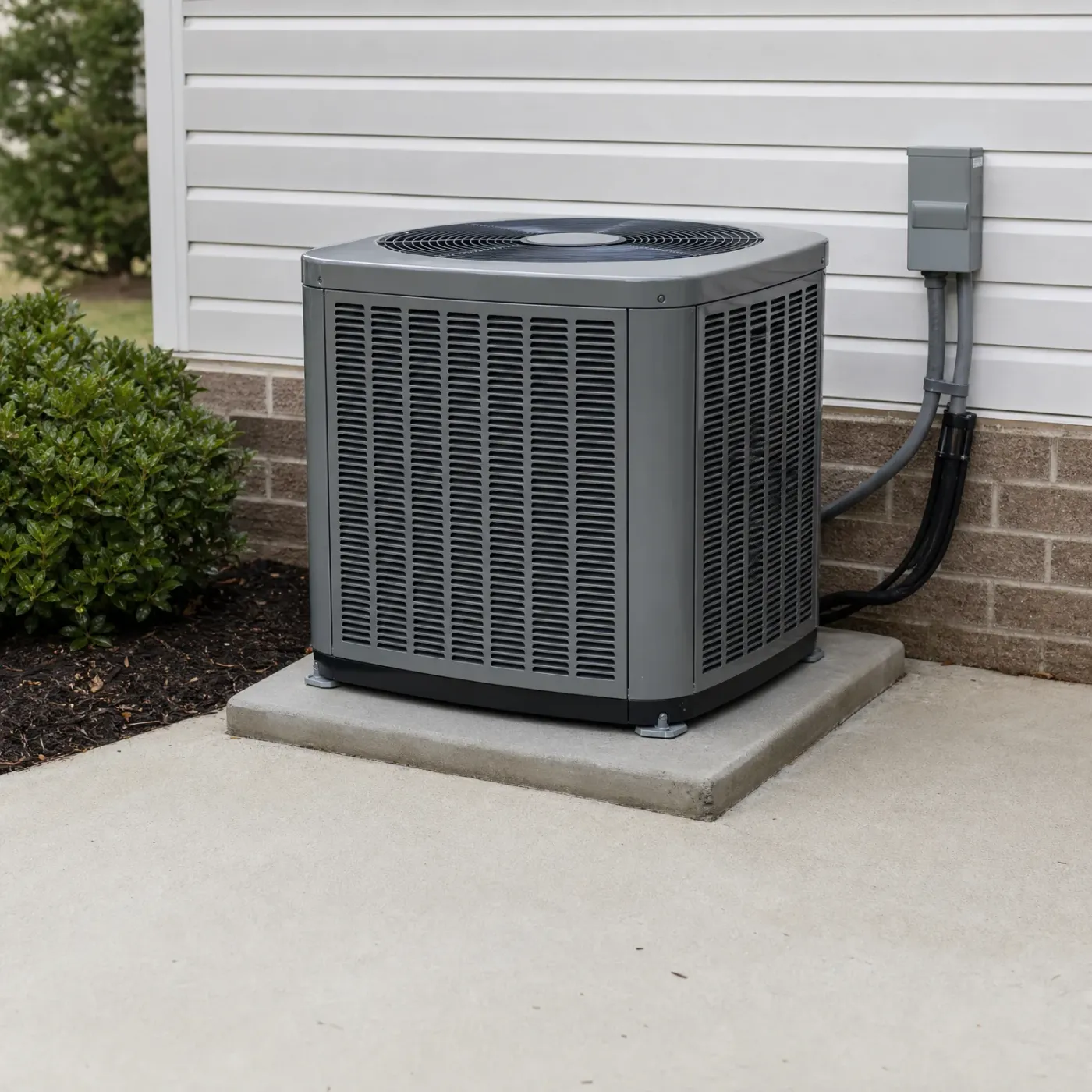
A clean condenser like this one is moving the air it needs to on a mild day, whether it's single-stage or two-stage.
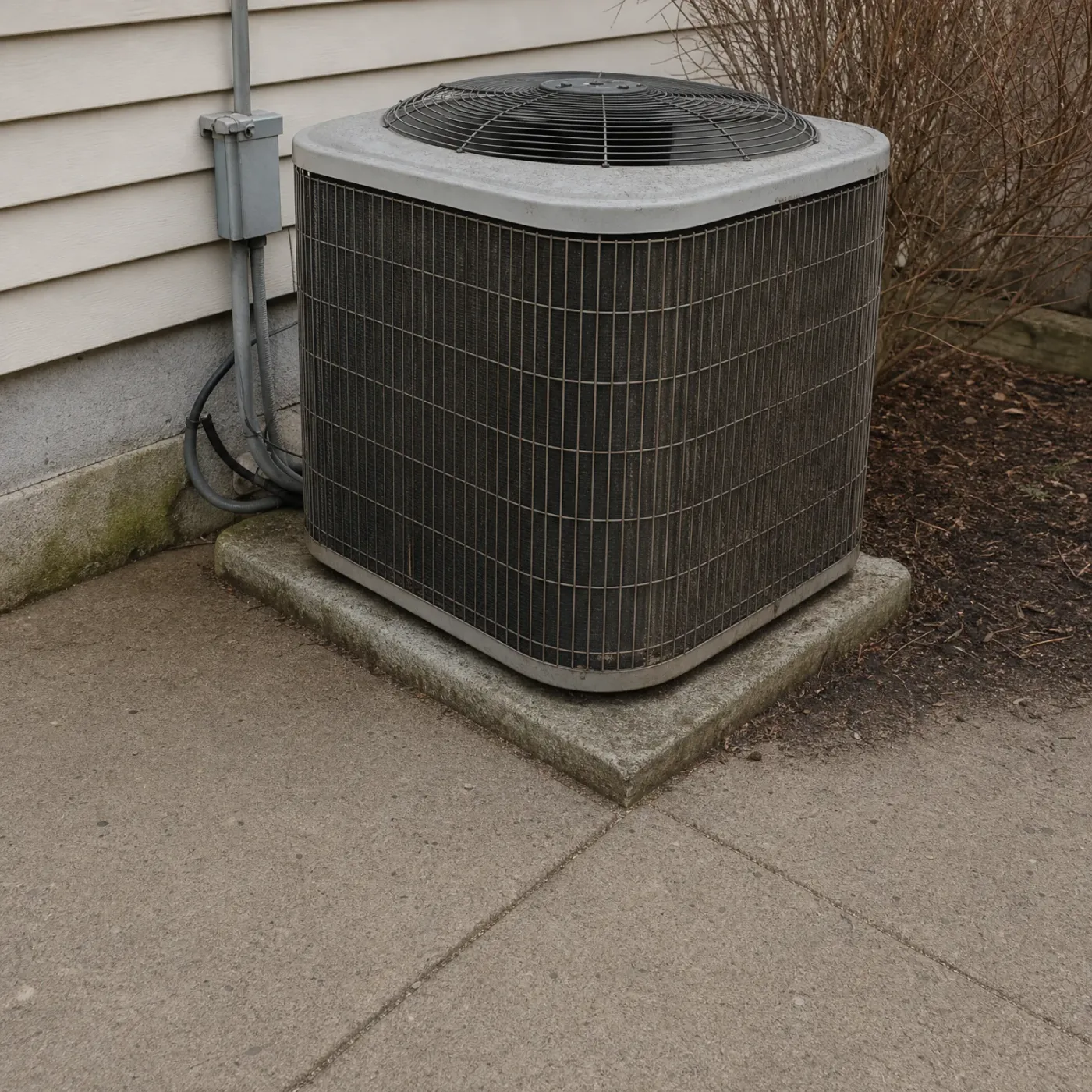
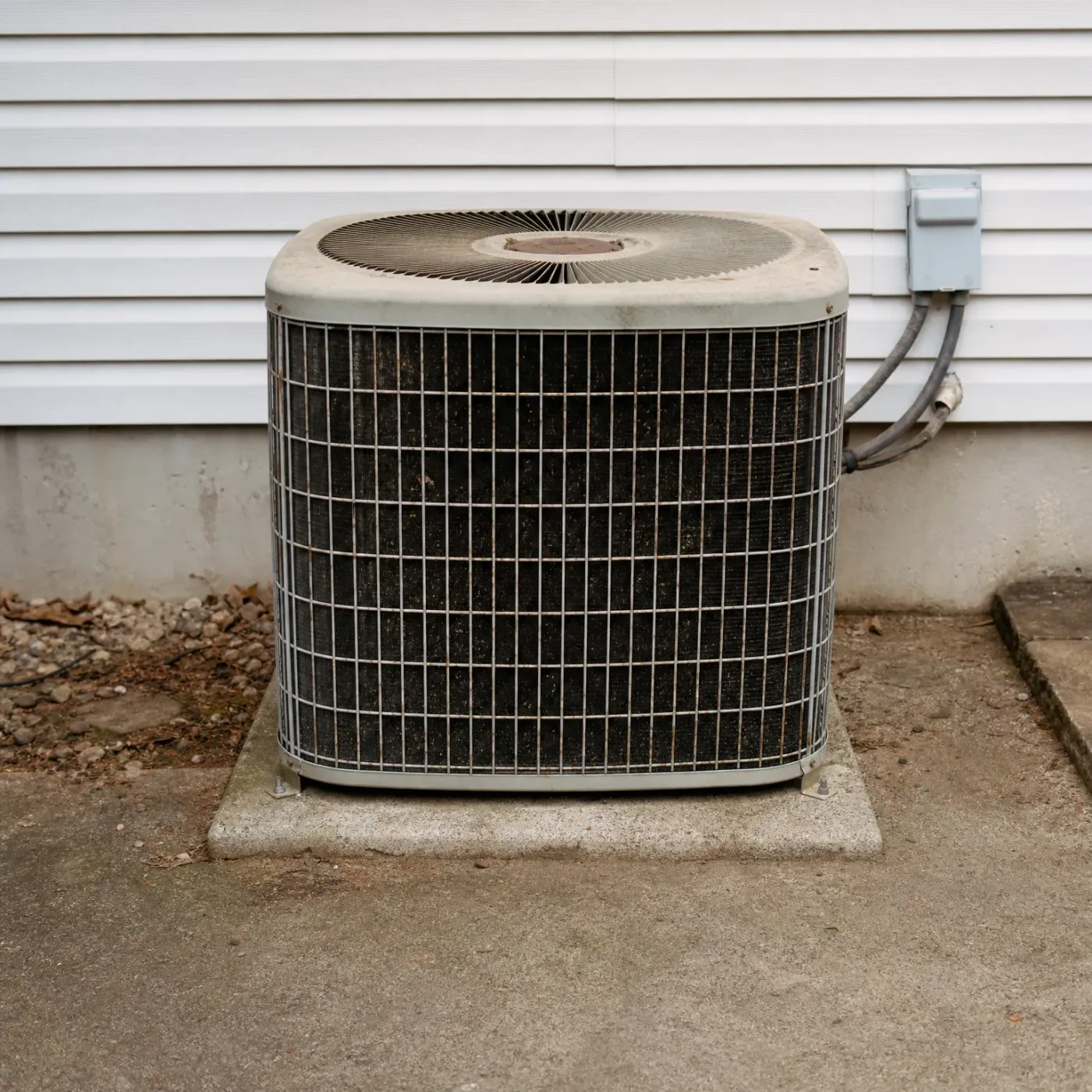
A unit caked in dirt on the grille and top cover has to work harder to move the same air, on either stage.
Power costs 13.17 cents per kilowatt-hour statewide
At 13.17 cents a kilowatt-hour, running your air conditioner longer on low stage doesn't add up the way it would somewhere with pricier power. A two-stage unit's main case is using less electricity to cool the same house, and here that savings is worth less each month.
EIA-861 2025 statewide residential average
1
The thermostat calls for cooling and the control board checks how far the temperature has drifted.
2
The compressor starts on low stage and the outdoor fan runs at reduced speed.
3
The indoor blower moves air at low speed, matched to low stage output.
4
If the house doesn't reach the setting fast enough, the board shifts the compressor to high stage.
Why does your AC seem to run nonstop on mild days
You notice the outdoor unit humming along on a 72-degree afternoon when it feels like it shouldn't need to run at all. The air from the vents feels gentler than you'd expect, not the hard blast you remember from the old system. That's normal for low stage, not a sign of trouble. What's worth paying attention to is a unit that never seems to quiet down even overnight, or rooms upstairs that stay warmer than the thermostat reading no matter how long it runs. If the system is working that hard just to keep up on a mild day, something else may be going on, whether it's the unit's age, a dirty filter, or ductwork that isn't moving air the way it should. Left alone, that kind of strain tends to shorten how long the equipment lasts.
Averaged over where homes sit in Washington, the summer dew point runs 53°F across June, July and August, figures from NOAA. That's dry air by national standards, and it's why your air conditioner isn't fighting moisture the way units do in muggier states. A compressor's harder job is usually wringing water out of the air, not dropping the temperature a few degrees. With a dew point that low, your system is mostly just moving air around a house that's already fairly dry. You'll notice it less as humidity and more as a unit that cycles on mild afternoons without ever working hard.
NASA POWER T2MDEW county cells weighted by homes
A two-stage AC earns its keep where summers push hard or power costs more. In Washington, cheap electricity and a mild summer take most of that case away. You'd still get quieter, steadier cooling day to day, but the extra cost of the upgrade doesn't pay you back the way it does somewhere hotter or pricier for power. Whichever way you decide, the next step is the same: getting the right unit sized and installed for your house. That usually means tracking down contractors, calling a few, explaining what you have and what you want each time, then sitting with quotes that are hard to compare because they're never quite for the same thing. Skip that part. Tell us whether you're leaning single-stage or two-stage, and a contractor who installs both will reach out and walk through what fits your house and your summer.