Signs of a bad AC capacitor in Washington

Step 1 of 3: Equipment

A bad capacitor usually shows up as an AC that hums but won't start, or one where the outdoor fan is barely turning. Sometimes the unit clicks and tries to kick on, then stops. The capacitor stores the charge that gets the compressor and fan motor moving, and once it weakens, those motors don't get the jolt they need. Heat and age wear it down, and a capacitor that's been pushed hard through warm Washington summers can fail even on a mild day. You might also notice the air isn't as cool as it should be, or the system is cycling on and off more than usual. None of this is something to test yourself with the power still on. It's an electrical part holding a charge, and diagnosing it means checking the reading against what the compressor and fan actually need, which takes a meter and knowing what the numbers should look like.

  1. The thermostat calls, sending power to the outdoor unit.

  2. The capacitor releases its stored charge into the motor.

  3. That charge gives the compressor and fan the jolt to start.

  4. A weak capacitor can't deliver enough charge to start them.

A man with grey hair and stubble in a dark sweater sits on a grey sofa indoors, looking off to the side, with a potted plant and a sunlit window behind him.
A man with gray hair, a beard and glasses, wearing a dark green sweater, sits on a gray sofa in a sunlit living room with a potted plant, table lamp and wooden sideboard behind him.
A middle-aged man with graying hair and a short beard sits on a blue sofa in a living room, looking toward a window, with a bookshelf, lamp and framed picture in the background.
A man with graying curly hair and a dark green sweater sits on a gray sofa in a sunlit living room, looking off to the side, with a framed picture, shelving, an armchair and a window with sheer curtains behind him.

Why does a bad capacitor make the AC hum instead of start?

You heard it the second the unit tried to come on: a hum from the outdoor cabinet, the fan not moving, no cool air behind it. It's not silent and it's not running right either, just stuck making noise. You want to know what that hum actually means before you decide whether this is worth a service call.

The motor is energized but has nothing to push it into motion

The hum is the motor windings getting power. What's missing is the push. A healthy capacitor sends out a jolt strong enough to spin the compressor and fan up to speed in an instant. A weak one sends out a trickle, enough to energize the motor but not enough to overcome its resistance at rest. So it just sits there and hums, drawing power without turning. Left alone, that draw heats the windings, and a motor that strains against a dead start this way can wear out trying. The hum is worth paying attention to the first time you hear it, not after it's happened a dozen times on a hot afternoon.

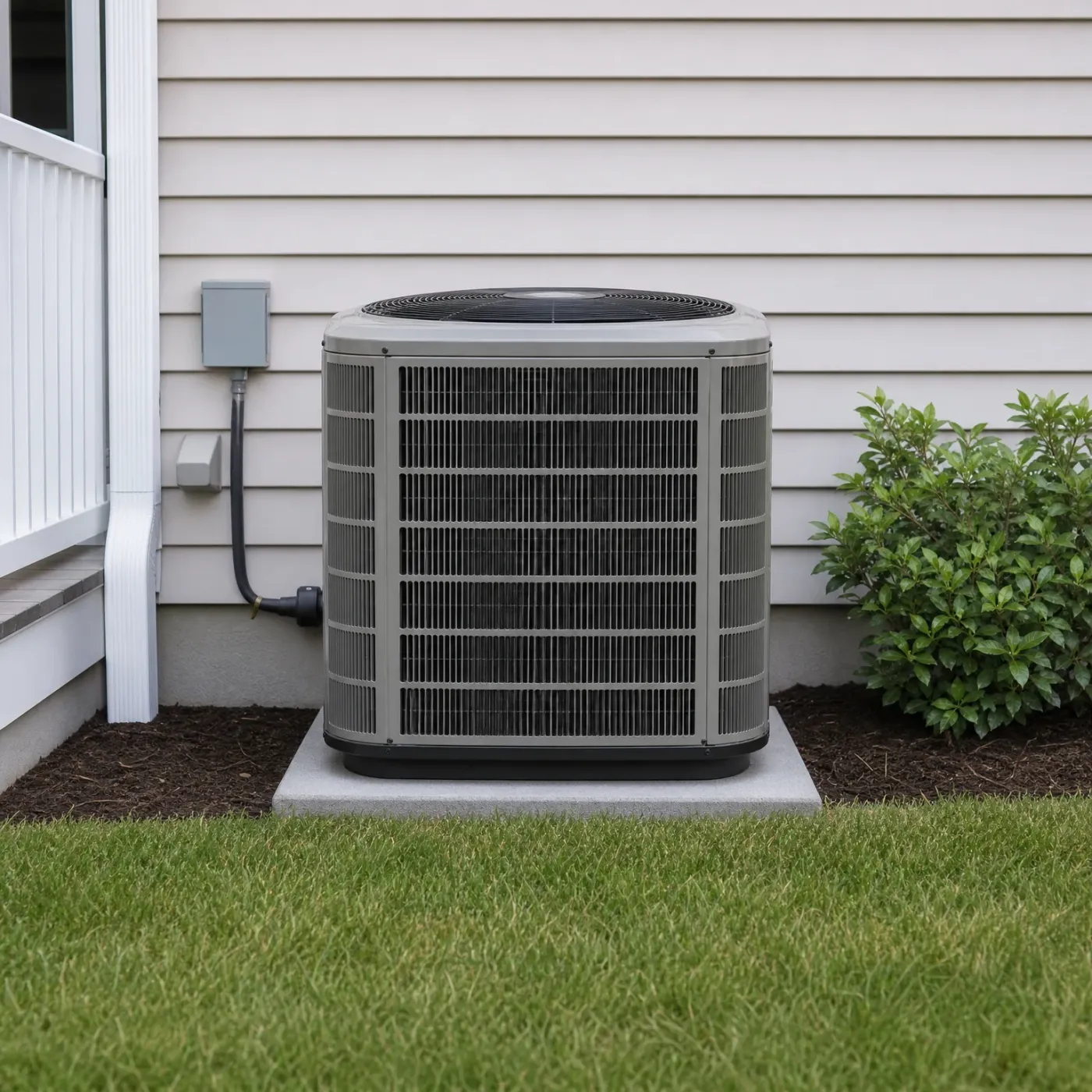
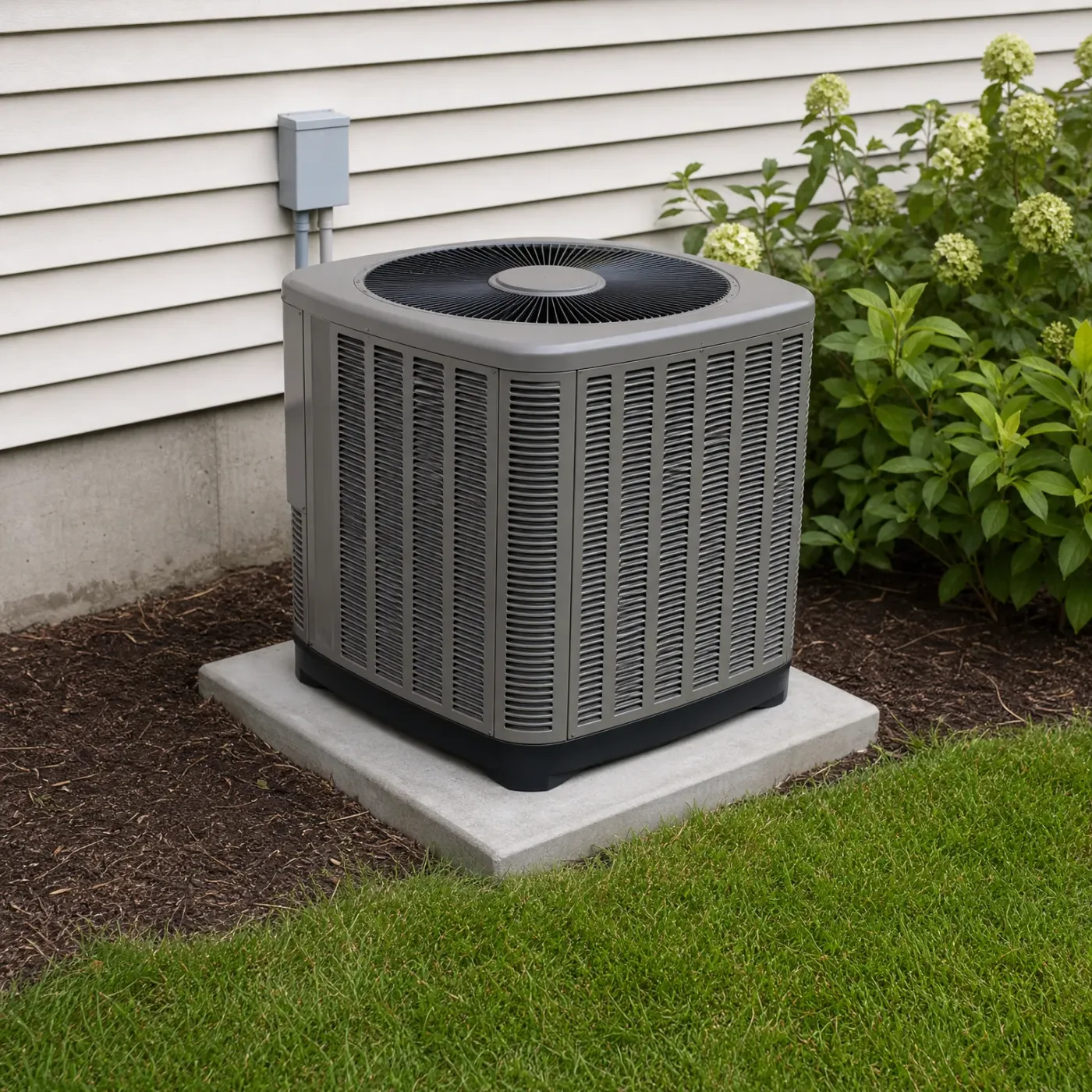
An outdoor air conditioning condenser unit on a concrete pad beside a house with horizontal lap siding, with a gray electrical disconnect box and conduit on the wall, mulch bed and shrub to the right, and mown grass in the foreground.
This is what a healthy capacitor looks like from outside: the fan spins right away and holds a steady speed.
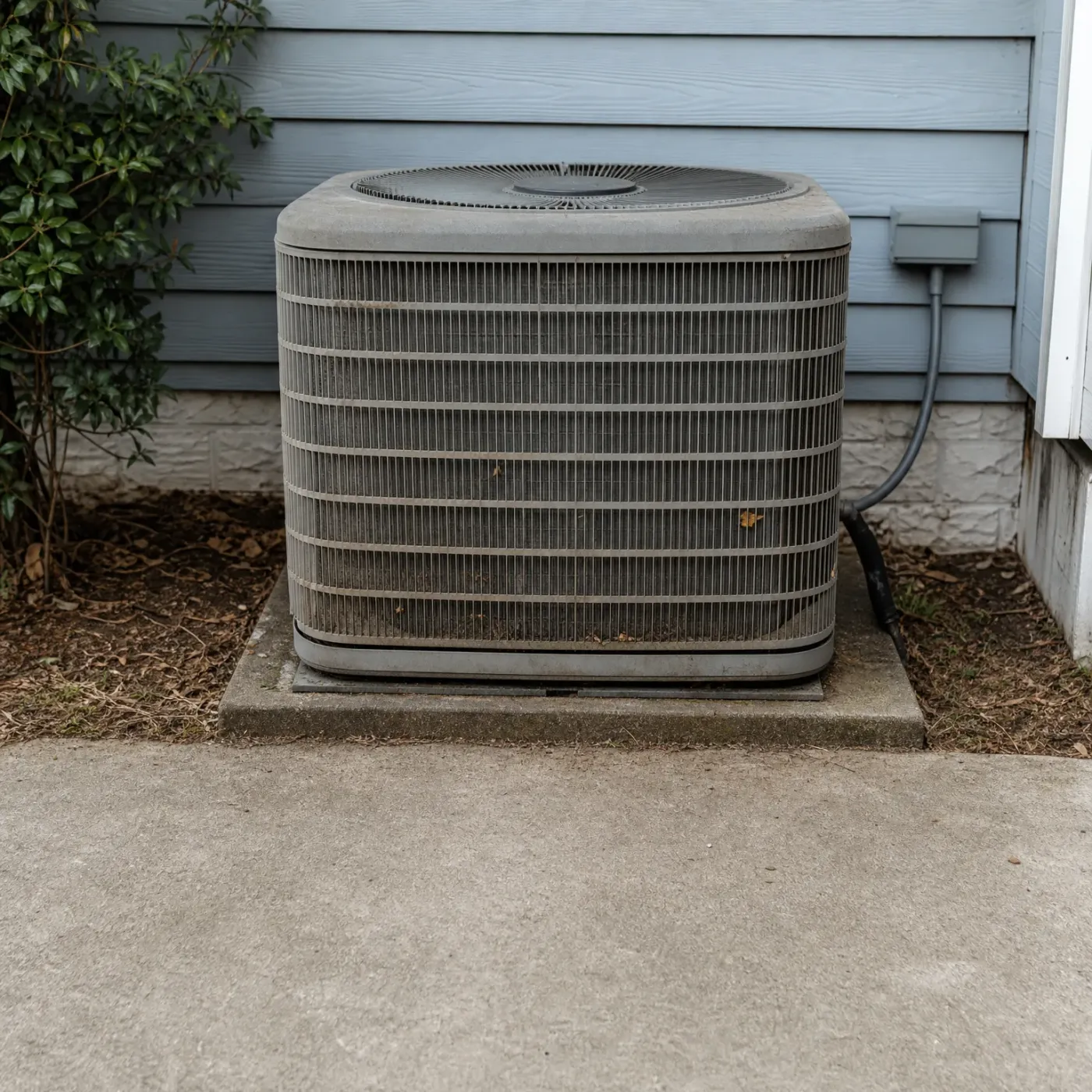
An outdoor air conditioning condenser unit on a concrete pad beside a house with light blue horizontal siding, with a shrub to the left and a conduit and disconnect box on the wall to the right.
A capacitor on its way out often still runs the fan, but caked coils like these make it work harder and fail sooner.
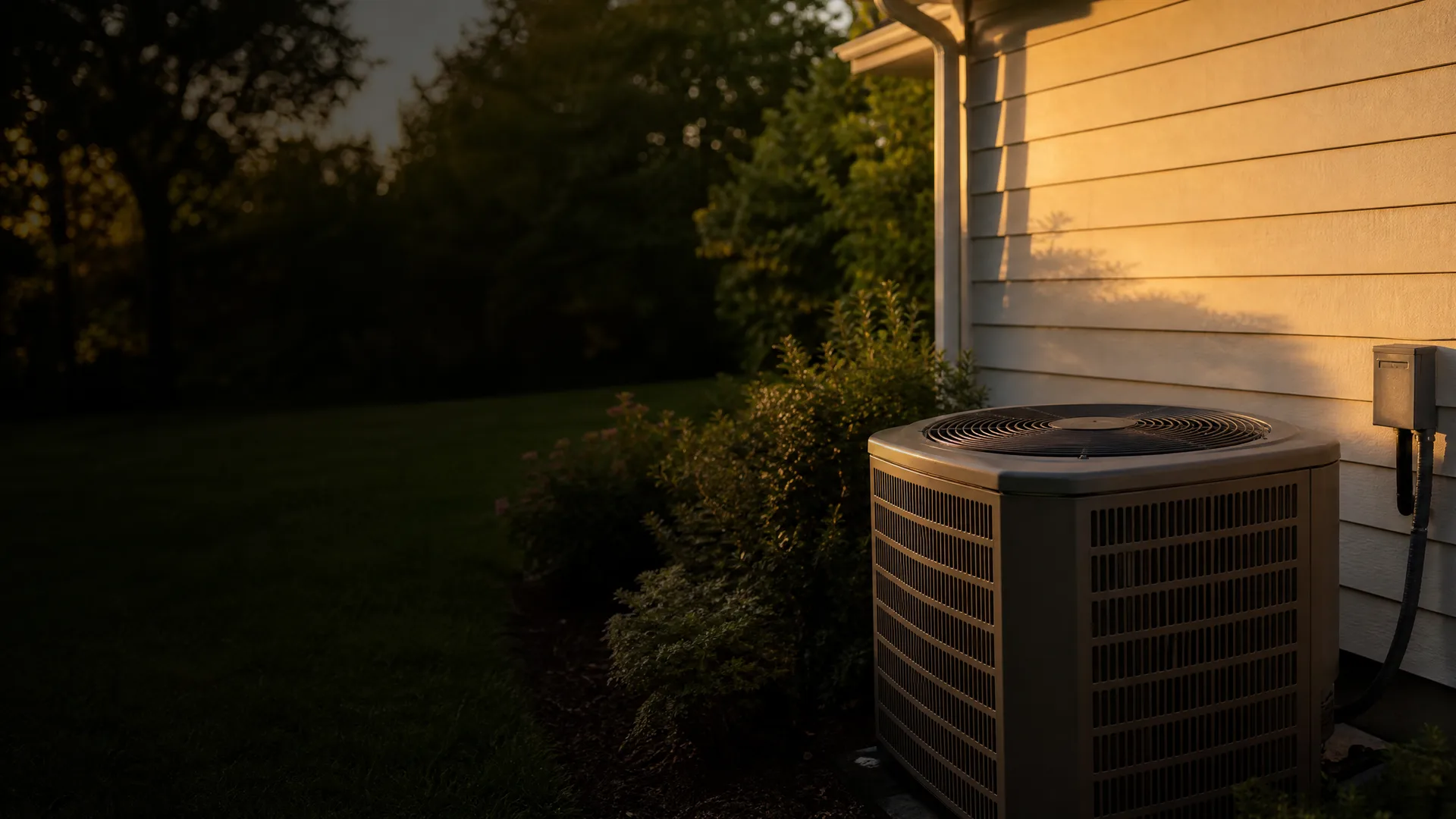
An outdoor air conditioner condenser unit beside a light-colored lap-sided house with an electrical disconnect box on the wall, surrounded by shrubs and lawn in low evening light.

You're out back around seven, watering the tomatoes before the light goes. The condenser is running, or it's supposed to be. You notice the sound first, that low hum, then you look over and the fan isn't spinning. It just sits there behind the grille while the unit keeps drawing power and going nowhere. Inside, your wife has the living room windows cracked, waiting on air that isn't coming. You crouch down and feel the side of the cabinet. Warm. You already know enough about this unit to know it isn't supposed to sound like that, hum and no air, so you head in to look up what's going on before you touch anything else.


Capacitor, or Something Else

Capacitor is the problem

  • The outdoor fan is stalled or barely turning, but the breaker hasn't tripped and the thermostat is calling for cooling.
  • You hear a hum from the outdoor unit that doesn't resolve into a running compressor after a few seconds.
  • The unit clicks and tries to start, then shuts back off, over and over, without ever catching.
  • Giving the fan blade a push by hand gets it spinning and the AC runs fine from there, at least for now.
  • The capacitor's case is bulging or swollen rather than flat on top, which happens as it fails.

Something else is going on

  • The outdoor unit doesn't respond at all, no hum, no click, which points to the breaker, a disconnect switch, or wiring rather than the capacitor.
  • Air is moving through the vents but it isn't cold, which usually means a refrigerant or airflow problem, not a failed start component.
  • The compressor runs but the whole system trips the breaker repeatedly, which can mean a short or a compressor drawing too much current.
  • Ice is built up on the indoor coil or the refrigerant lines, a sign of low airflow or low charge rather than a start issue.
  • The thermostat screen is blank or unresponsive, which points to a thermostat or control wiring problem before the outdoor unit is ever involved.
Single-story house with gray horizontal lap siding, dark shingled gable roof, a small covered front porch with a dark door, and windows, set behind a patchy green and brown lawn under a clear blue sky.

Summer air in Washington sits at a dew point of 53°F, according to NOAA averages for June, July and August. That's dry enough that your AC isn't fighting to wring moisture out of the air the way systems do in muggier states. Most of the load falls on the compressor and fan to move heat outside, which is exactly the job a weak capacitor can't finish. That's why a capacitor here tends to fail quietly, a hum, a fan that won't spin, rather than a system that's clearly drowning. A local contractor who works on these units all summer knows that pattern cold, and checking it is a quick, specific job, not a guessing game across half your system.

NASA POWER T2MDEW county cells weighted by homes

Hand off the air conditioner problem

A stalled capacitor doesn't wait for a convenient week. It usually gives out on a hot stretch, right when the compressor is cycling the most, and a unit that hums instead of running isn't cooling your house while you decide what to do about it. Washington's summers aren't heavy with humidity, so the strain on that capacitor comes from the compressor working on and off through warm afternoons, not from wringing moisture out of thick air. When it fails, you want someone who already knows what a Washington AC unit tends to throw at them this time of year, not a string of companies bidding for the job. Send the request and it goes to one licensed contractor local to you, someone who works on this equipment all summer and recognizes a bad capacitor fast. From there, finding help stops being something you have to manage.

An outdoor air conditioner condenser unit on a concrete pad beside a house with light gray horizontal siding, with mulch and green shrubs on either side and a concrete walkway in the foreground.
Before you get your air conditioner repair
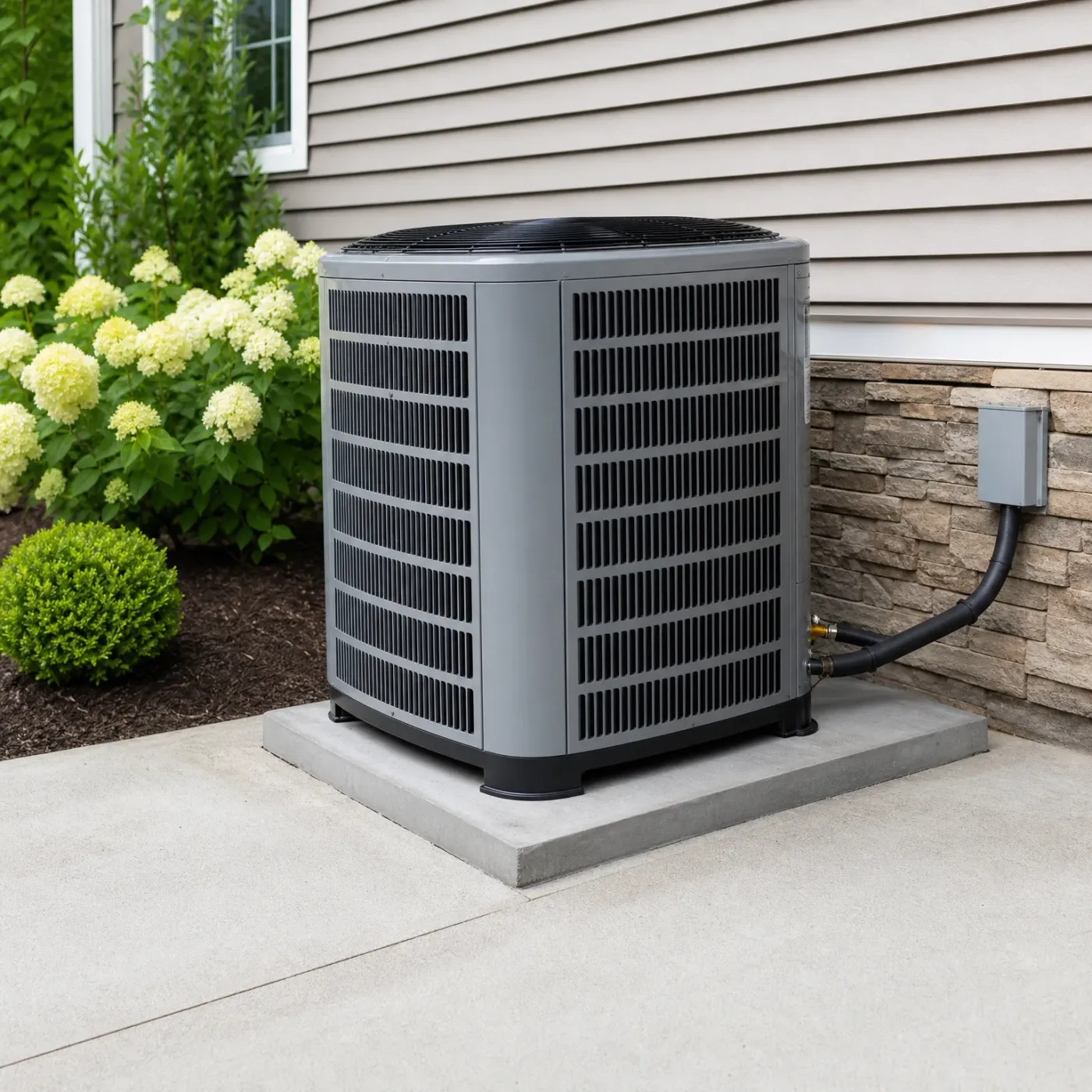
A gray outdoor air conditioning condenser unit on a concrete pad beside a house with horizontal siding and a stone veneer base, with refrigerant line and electrical disconnect box on the wall and flowering shrubs to the left.
After you get your air conditioner repair
A gray outdoor air conditioner condenser unit on a concrete pad beside a house with horizontal vinyl siding, surrounded by mulch, flowering shrubs, and lawn.

Clean and running right

The coils are clear and the fan spins up the second the thermostat calls. A capacitor at full strength delivers that jolt every time, so the compressor and fan start together without hesitation. Nothing hums, nothing stalls, and the unit cools on the first try.

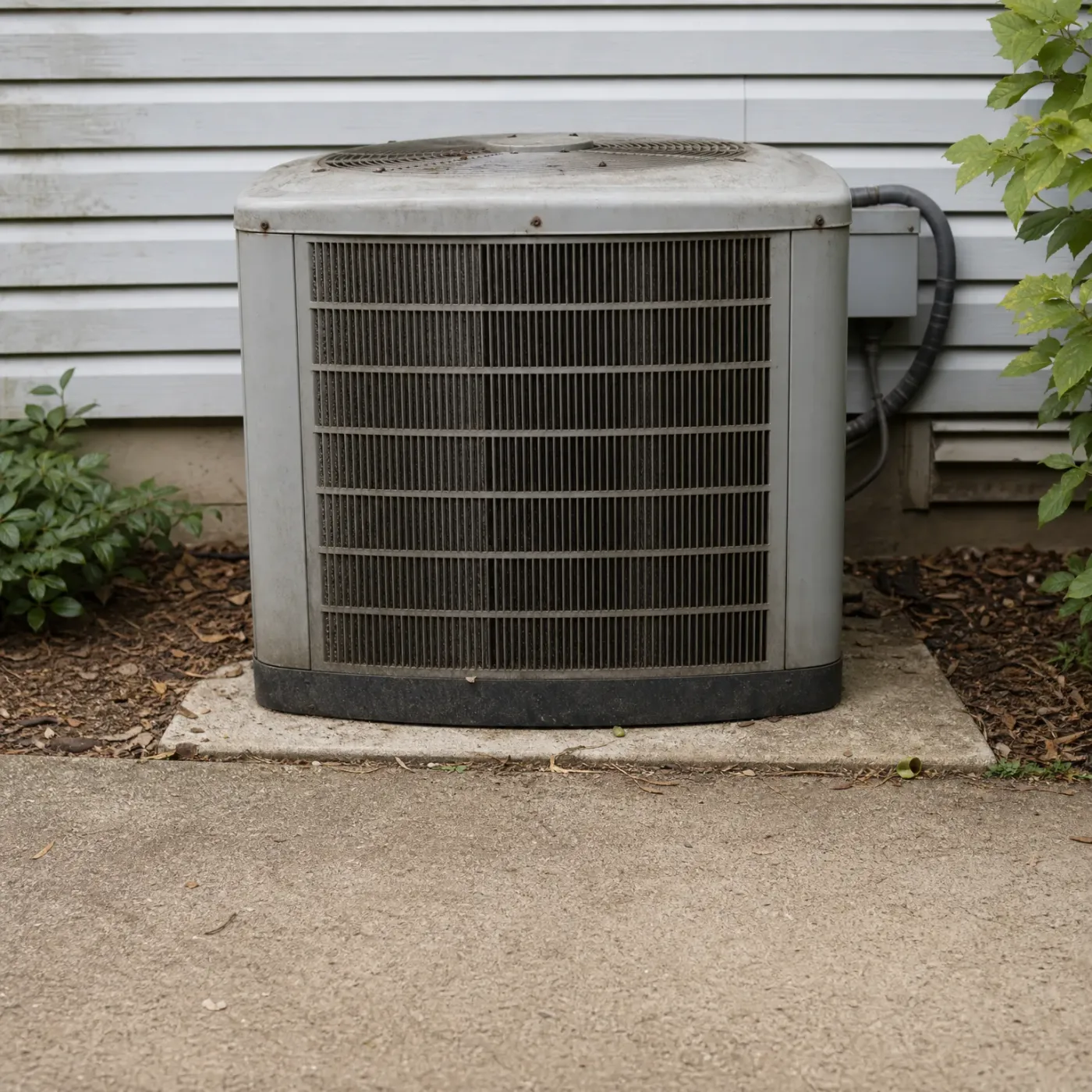
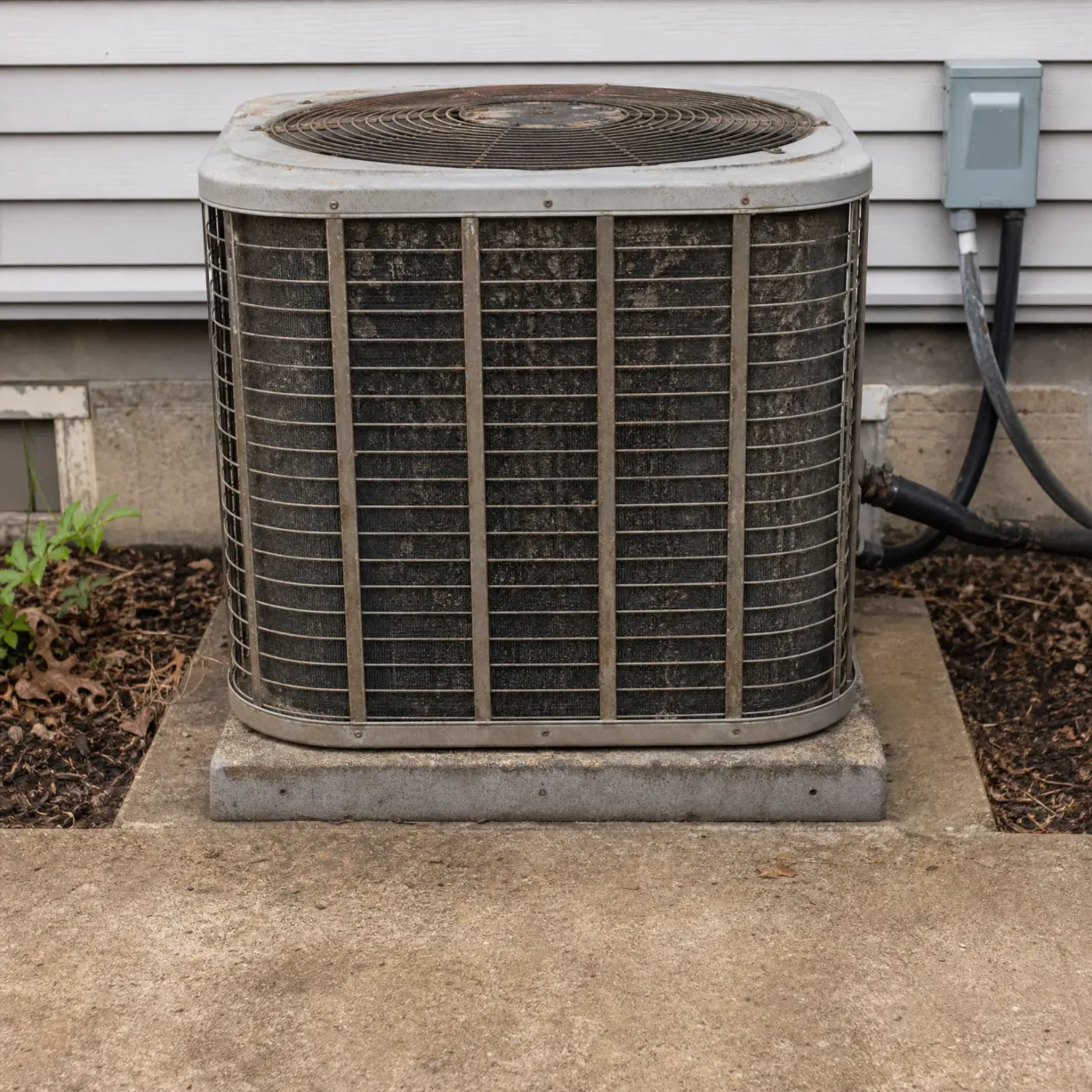
A weathered outdoor air conditioning condenser unit on a concrete pad beside a house with light horizontal siding, an electrical disconnect box and conduit on the wall, and mulched soil on either side.

Caked coils, strained start

Grime like this across the fins makes the unit work harder to move air, and that extra strain wears on a capacitor already losing charge. You'll hear it first: a hum, a fan that's slow to turn or doesn't turn at all. The disconnect box still has power, but the start never quite happens.

Power costs 13.17 cents per kilowatt-hour statewide

At 13.17 cents per kilowatt-hour, a struggling compressor costs you more without cooling your house any better. A failing capacitor makes the motor draw extra current just trying to start, and that extra draw shows up on your bill before the unit ever quits for good.

EIA-861 2025 statewide residential average

What a Bad Capacitor Looks Like

  • A hum with no spin, a fan that won't start, or a unit that clicks and quits all point to the same part.
  • None of those symptoms require guessing, since a weak capacitor fails the same way on nearly every system.
  • Leaving a stalled fan running draws extra current without cooling your house, so the problem doesn't wait quietly.
  • A local contractor who services this equipment all summer knows a bad capacitor by the sound before the gauges confirm it.
  • Sending one request means one contractor calling you back, not a string of companies working the same lead.
  • Once that call comes in, matching you with someone qualified to check the capacitor is no longer something you have to sort out yourself.

A hum with no fan movement, a unit that clicks and gives up, a compressor that won't catch. That's a capacitor, not a mystery. It fails the same way on nearly every system, so there's no guesswork involved in spotting it, just in deciding what to do once you have.

Leaving it alone doesn't buy you time. A motor straining to start on a weak capacitor pulls extra current whether or not it ever gets moving, so you're paying for a unit that isn't cooling anything. That's true the first hot afternoon it happens, not just after a week of it.

This is common enough that a contractor who works on air conditioners through a Washington summer has heard it plenty of times, often before checking a single gauge. That's the kind of match that matters here. One request goes to one licensed local contractor, not a handful of companies competing for the same job, so you're not fielding calls from three different outfits trying to beat each other to your address. You get someone who already knows what a failing capacitor sounds like and what else to check while they're out there, because that's the equipment they work on all season.

The part itself is straightforward to diagnose and replace. What takes the guesswork out of the rest is having someone qualified look at it before a bad capacitor takes anything else down with it.

Kitchen corner with cream upper cabinets, oak lower cabinets, white marble-look countertop, beige tile backsplash, a ceramic vase of greenery, a wooden cutting board and bowl, and a black-framed window at right.
Interior corner of a room with a white-framed window and wide sill, beige walls with panel molding, a wooden cabinet holding a ceramic vase with a green leafy plant, and blurred shrubs and trees outside.
A wood-framed armchair with beige cushions and a woven lumbar pillow sits in a corner beside a large window overlooking green trees, with a tall ceramic vase holding leafy branches on the left and plaster walls and wood flooring.
Interior corner with a white-framed window above a sill, beige walls with baseboard molding, a greige shaker-style cabinet with brass knobs and a potted plant on top, light wood flooring and a woven jute rug.
A dark-framed six-pane window with white trim and sill set in gray horizontal lap siding, with hydrangea shrubs below and a white column and shingled roof section at left.

Send one request and you're done looking

The pro who reaches out is licensed in Washington.

Send my request

You're not committing to anything by asking.