









Evergreen State Cooling

Why your AC smells like burning in Washington

Step 1 of 3: Equipment

Why does my AC smell like something's burning?

A burning smell coming from your AC vents or the outdoor unit is not something to wait out, especially when the house is closed up and the air handler is running most of the day. You want to know whether this is a quick fix or something that means the system needs to come off right now. The smell itself is the clue, and what it means depends on exactly where it's coming from.

A burning smell means something electrical is overheating

A hot, acrid smell from the vents usually points to the motor or a wiring connection running too hot, sometimes a stuck blower or a failing capacitor forcing the motor to work harder than it should. A sharper, more chemical smell near the outdoor unit can mean the compressor itself is under strain. Either way, the smell shows up before the part fully fails, which is why it's worth shutting the system off at the thermostat rather than running it through the day. With electricity powering nearly every home's heating and cooling in Washington, these systems run on the same wiring and motors as everywhere else, so the smell means the same thing here that it would anywhere: stop the unit and have it looked at before that part burns out.

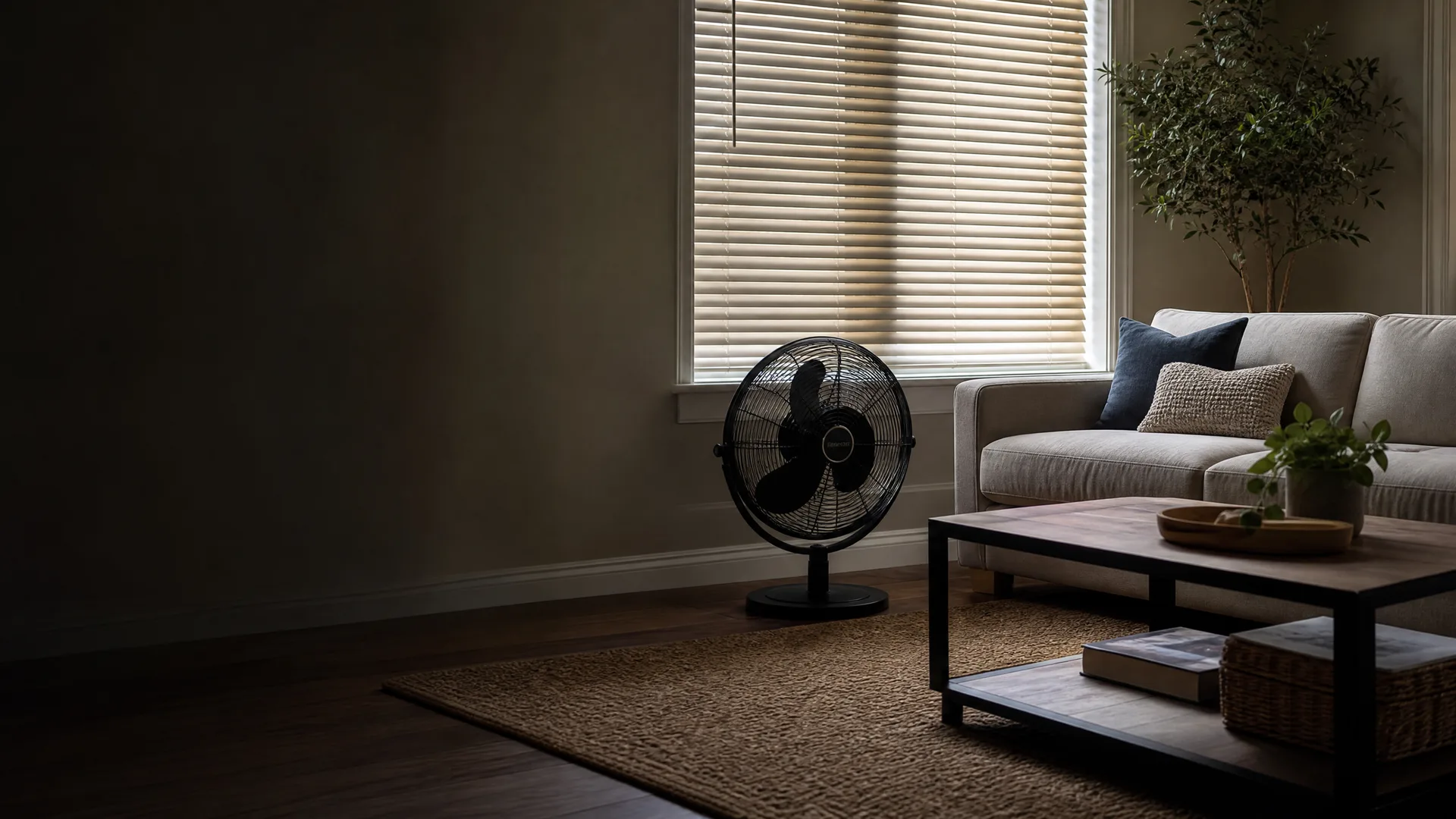
A dimly lit living room with a black table fan on the wood floor near a window with closed blinds, beside a light-colored sofa with cushions, a wooden coffee table, a woven rug, and a potted tree.

You've got the blinds drawn against the sun, the floor fan going next to the couch, and the AC running steady in the background. Then you catch it, that burning smell drifting out of the vent. You check the thermostat. Still set where it always is. You walk over to the vent and hold your hand near it, half expecting smoke. There isn't any, just that smell, sharp enough that you turn the unit off at the wall and sit back down. The fan keeps turning. Outside, the afternoon sun is still hard on the siding, and the house is starting to feel it.

A woman in a cream sweater and jeans stands in the open doorway of a white stucco house, holding the dark door, while a man in a dark quilted jacket seen from behind walks toward the entry past potted plants.

What's actually burning in there

Inside the air handler, a motor spins the blower wheel that pushes air through your ducts. That motor has windings coated in insulation, and if the motor is failing, those windings can overheat and give off a smell like hot electrical tape. A slipping blower wheel, a seized bearing, or dust packed thick around the motor can all make it run hotter than it should. Outside, the compressor has its own windings and its own way of failing the same way.

Sometimes it's simpler than a motor. Dust and pet hair sitting on a heat strip or burning off a dirty coil will smell sharp for a few minutes and then stop. That kind is worth noting but it clears on its own. A smell that keeps coming back, or gets stronger, means something electrical is heating up when it shouldn't. A local contractor who works on these systems all summer can tell the difference fast, because they've opened up enough of them to know which one is which, and once you're matched you're only dealing with that one contractor, not fielding calls from several.

A living room corner with a beige sofa and cushion, a round wooden coffee table holding a pale ceramic vase of eucalyptus stems and a wooden bowl, and a curtained window with a potted plant above a latticed radiator cover in the background.
A two-story house with gray and light gray siding, white-trimmed windows and a white front door, flanked by deciduous trees, with a partly browned lawn in front under a clear blue sky.

Summer air in Washington sits at a dew point of 53°F, averaged across June, July and August by NOAA. That's dry air. Your AC isn't fighting moisture the way systems in muggier states do, so the compressor and blower aren't working overtime just to wring water out of the house. When a burning smell shows up here, it points more squarely at something mechanical, a motor, a belt, a wiring connection, rather than a system strained by humidity. That's useful, because it narrows down what's going on before anyone even opens the unit. A contractor who works on AC systems in this kind of dry summer climate knows that pattern, and knows it's worth checking the electrical and motor components first rather than guessing at moisture-related wear.

NASA POWER T2MDEW county cells weighted by homes

Get your air conditioner to the right pro

Your request stays with one local pro.

You only hire the pro if you want to.

If it smells like dust burning

Run the AC for the first time after it's sat idle for a while and you'll often catch a faint burning dust smell for the first few minutes. That's dust on the heat exchanger surfaces or in the blower housing burning off. It fades on its own within ten or fifteen minutes and doesn't come back once the unit has run a cycle or two. No wiring smell to it, no plastic edge, just dust. If that's what you're smelling and it clears up fast, there's nothing wrong with the system. Let it run and check back in a few minutes before you assume the worst.

If it keeps coming back or gets stronger

A smell that doesn't fade, or one that shows up every time the AC kicks on, is a different situation. That points to something electrical rather than dust, a motor winding, a wire connection, a capacitor. Those don't clear themselves up by running longer. If anything, running the system longer while that's happening is the wrong move. Shut it off at the thermostat and the breaker if you can still smell it after fifteen minutes, or if it smells sharp and plastic rather than dusty. That's the difference that matters here: a smell that fades is normal, a smell that holds or grows is a sign something needs to be looked at before you run the system again.

A gray-haired man in a dark sweater sits on a light gray sofa in a living room, looking toward a sunlit window with trees outside.
A gray-haired man in a dark blue sweater sits on a light gray sofa in a sunlit living room, looking off to the side, with a potted plant, shelving unit, and large glass doors behind him.
A bearded man with graying hair in a dark green sweater sits on a sofa in a living room, looking off to the side, with a sliding glass door and a dim kitchen doorway behind him.
A gray-haired man in a dark knit sweater sits on a light gray sofa in a living room, looking toward a sunlit window, with houseplants, a lamp, and framed art in the background.

The blower motor sits next to a run capacitor, and when that capacitor starts to go, the motor has to work harder and runs hotter than it's built for. Sometimes you can see it coming. The top of the capacitor's case swells or bulges before it finally fails. The outdoor unit has its own motor and capacitor for the fan, and that smell can come from out there instead of the vents. Wiring inside the air handler or the outdoor disconnect box loosens over time, and a loose connection arcs, which gives off a hot, acrid smell different from dust burning off. There's also a contactor in the outdoor unit, the part that switches the compressor and fan on and off. Years of cycling can pit it or make it stick, and a stuck contactor overheats the wiring right around it. If the smell is coming from outside rather than through the vents, it's almost always one of these electrical parts, not a refrigerant problem.

Where the smell starts

  • The blower motor has a run capacitor next to it, and a capacitor going bad makes the motor work harder and run hotter than it should.
  • A failing capacitor often shows swelling or a bulge on the top of its case before it fails outright.
  • The outdoor unit has its own motor and capacitor for the fan, and the same overheating smell can come from that side instead.
  • Wiring connections inside the air handler or the outdoor disconnect box can loosen over time, and a loose connection arcs and gives off a hot, acrid smell.
  • A contactor in the outdoor unit can pit and stick from years of cycling on and off, and a stuck contactor overheats the wiring around it.
  • If the smell is coming from the outdoor unit rather than the vents, the problem is almost always electrical, not the refrigerant side.
A woman with shoulder-length brown hair wearing a beige knit cardigan sits in a gray upholstered armchair near a window, looking off to the side with a slight smile, with bookshelves blurred in the background.
A woman and a child wrapped together in a knitted gray blanket on a couch, with the child's head resting on her shoulder and a lit table lamp and houseplant in the background.
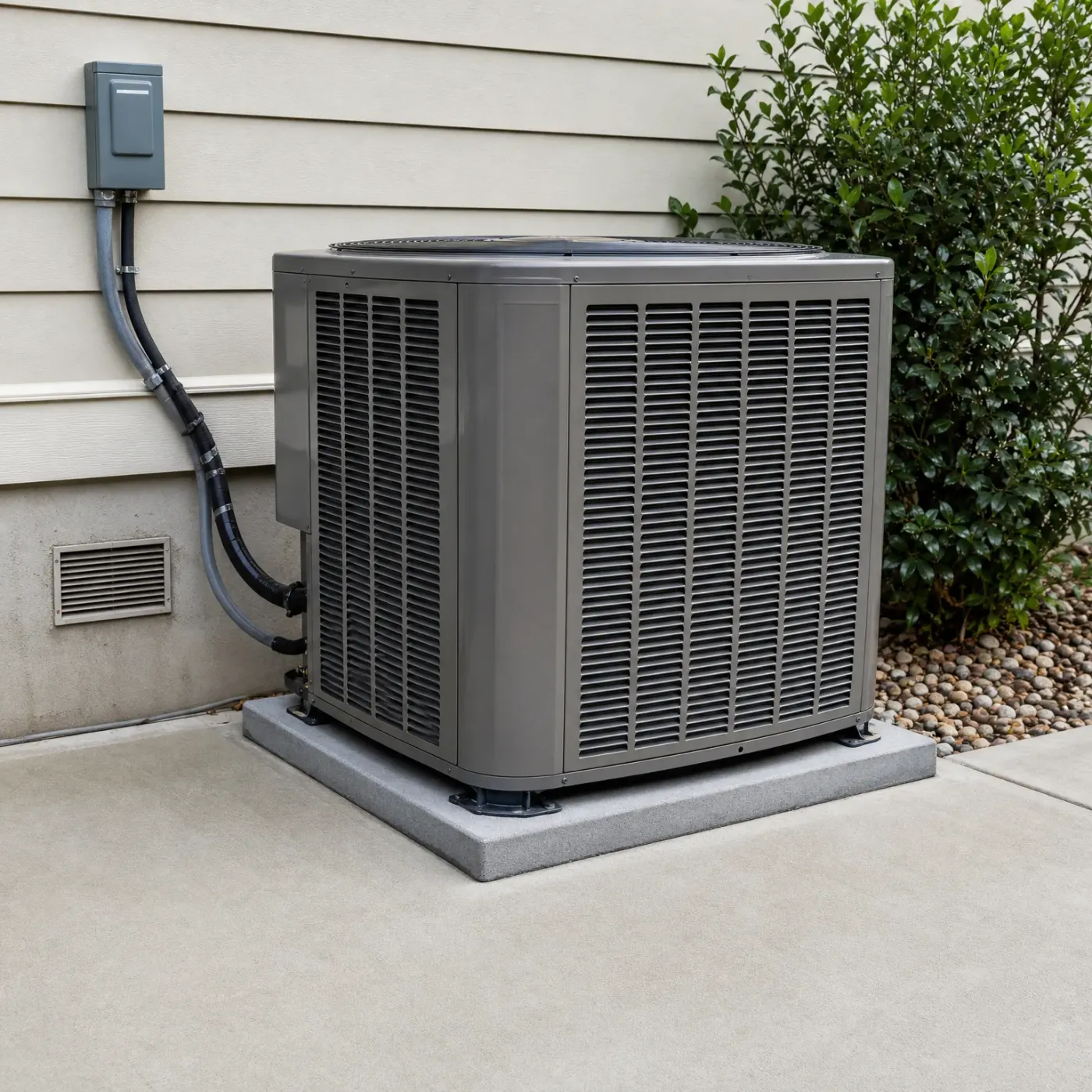
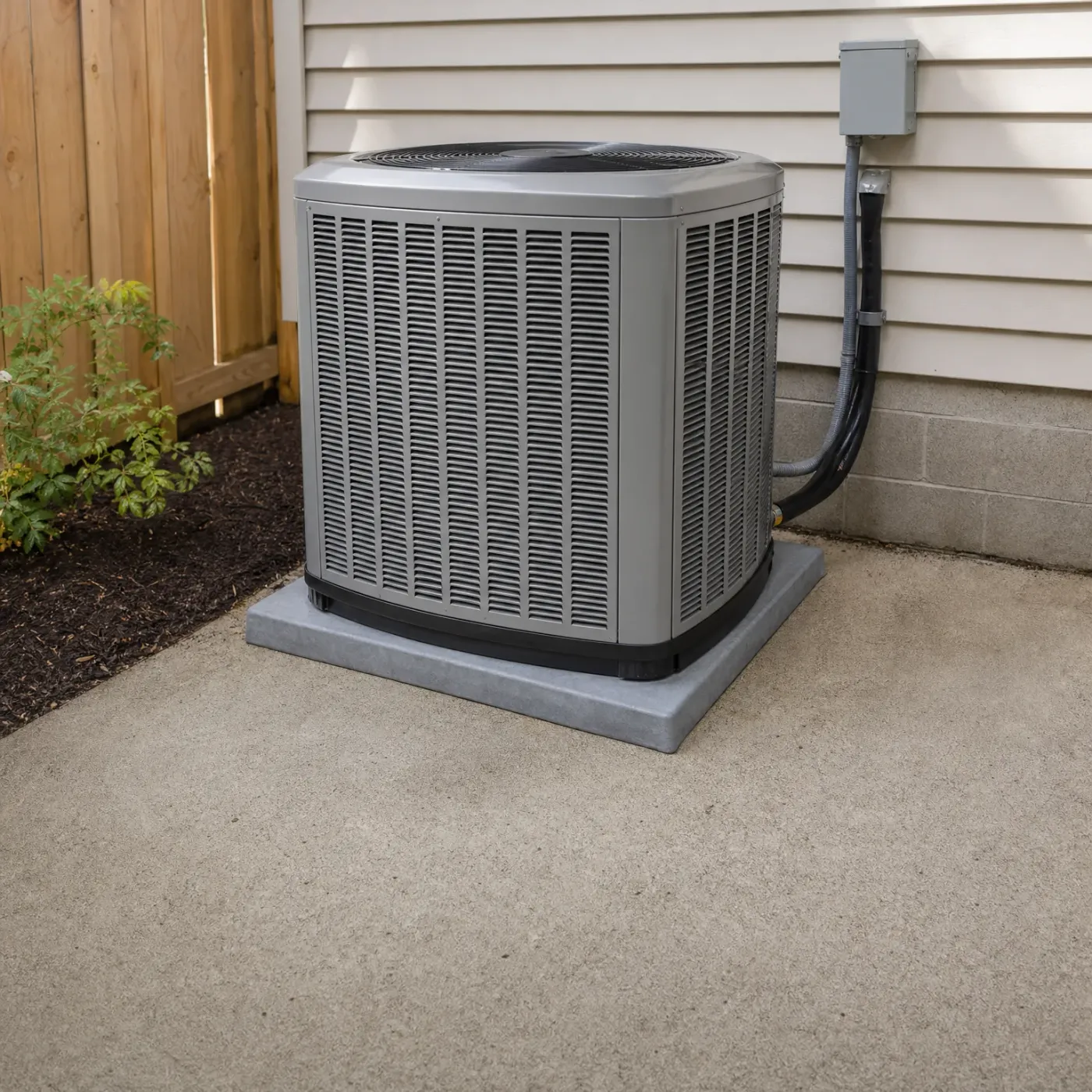
A gray outdoor air conditioning condenser unit on a composite pad beside a house with horizontal lap siding, with a wall-mounted disconnect box, refrigerant lines, and a wooden fence and shrubs to the left.

Running clean

This is what your condenser should look like doing its job: sitting quiet on the pad, lines and conduit running straight up to the disconnect, no smell anywhere near it. If yours matches this and the burning smell is coming from inside the house, the trouble is in the air handler, not out here.
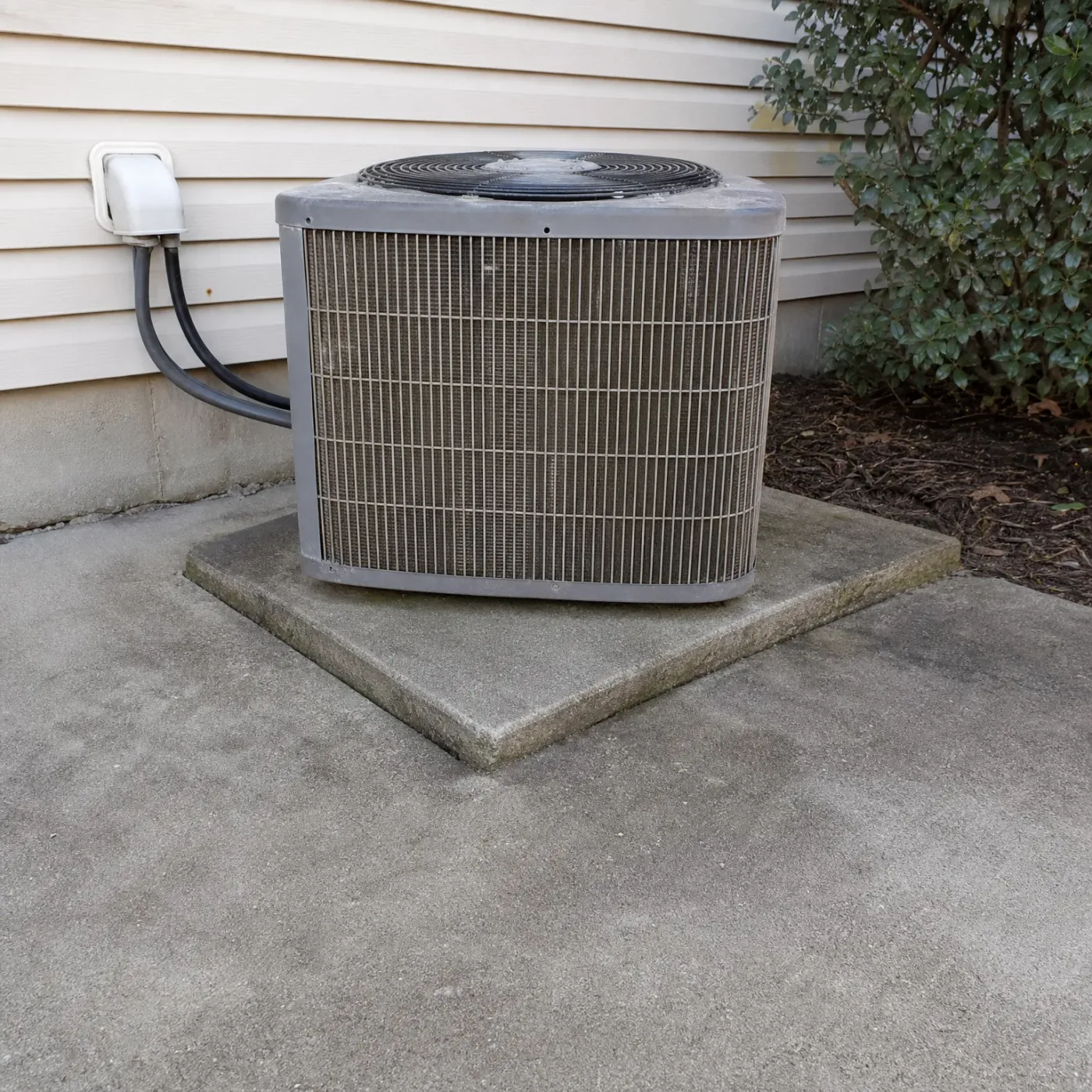
An outdoor air conditioning condenser unit on a concrete pad beside a house with light vinyl siding, with electrical conduit running to a wall-mounted disconnect box and a shrub in mulch to the right.

Something's wrong at the unit

If the burning smell follows you outside to the condenser, look at the wiring running from the disconnect box into the unit. Loose connections or a failing contactor inside can scorch wire insulation right at that junction, and that smell won't clear on its own.

An outdoor air conditioning condenser unit sits on a concrete pad beside a house with horizontal vinyl siding, with a gray electrical disconnect box and insulated refrigerant line on the wall above, surrounded by bare mulched ground.
Before you get your air conditioner repair
A gray outdoor air conditioning condenser unit sits on a concrete pad beside a house with horizontal siding, connected by insulated lines to a wall-mounted disconnect box, with a shrub and gravel bed to the right.
After you get your air conditioner repair
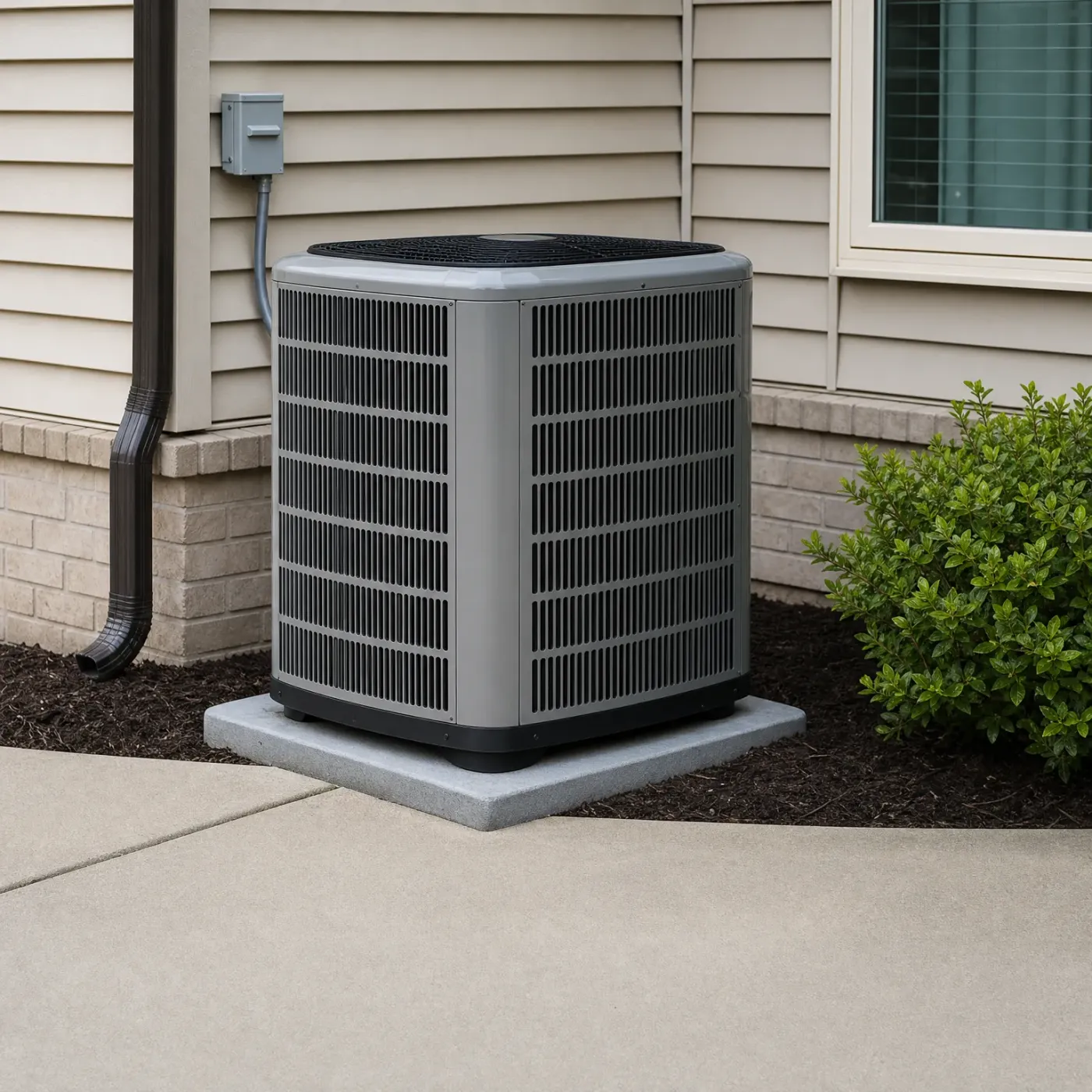
A gray outdoor air conditioning condenser unit on a concrete pad beside a house with horizontal vinyl siding, a brick foundation, downspout, electrical disconnect box, mulch bed and a green shrub.

Clean and clear around the unit

The grille is open and the fins underneath are visible, not packed with mulch or clipped by the shrub. Air moves through it the way it's supposed to, so the compressor and fan motor run at a normal temperature instead of straining against blocked airflow.

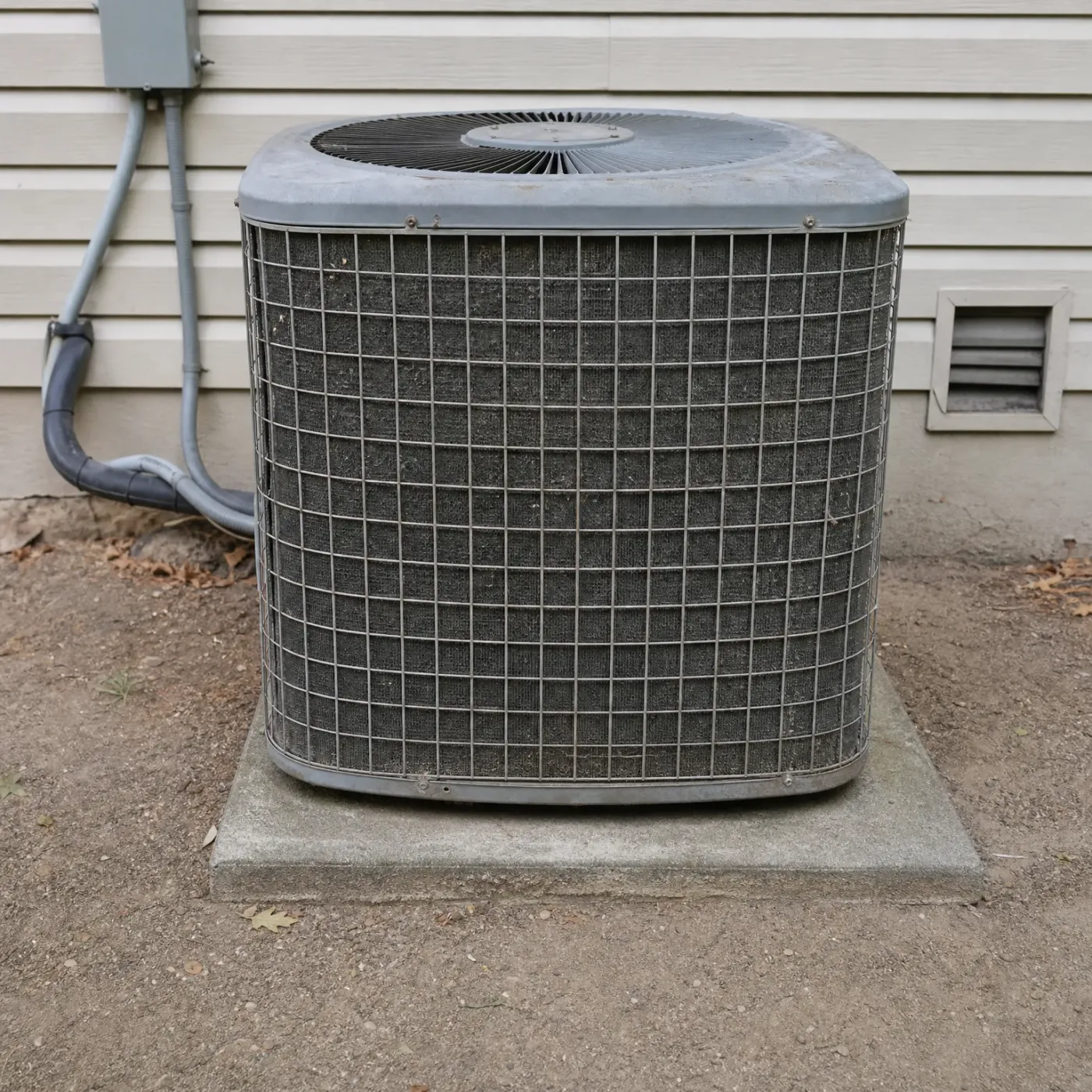
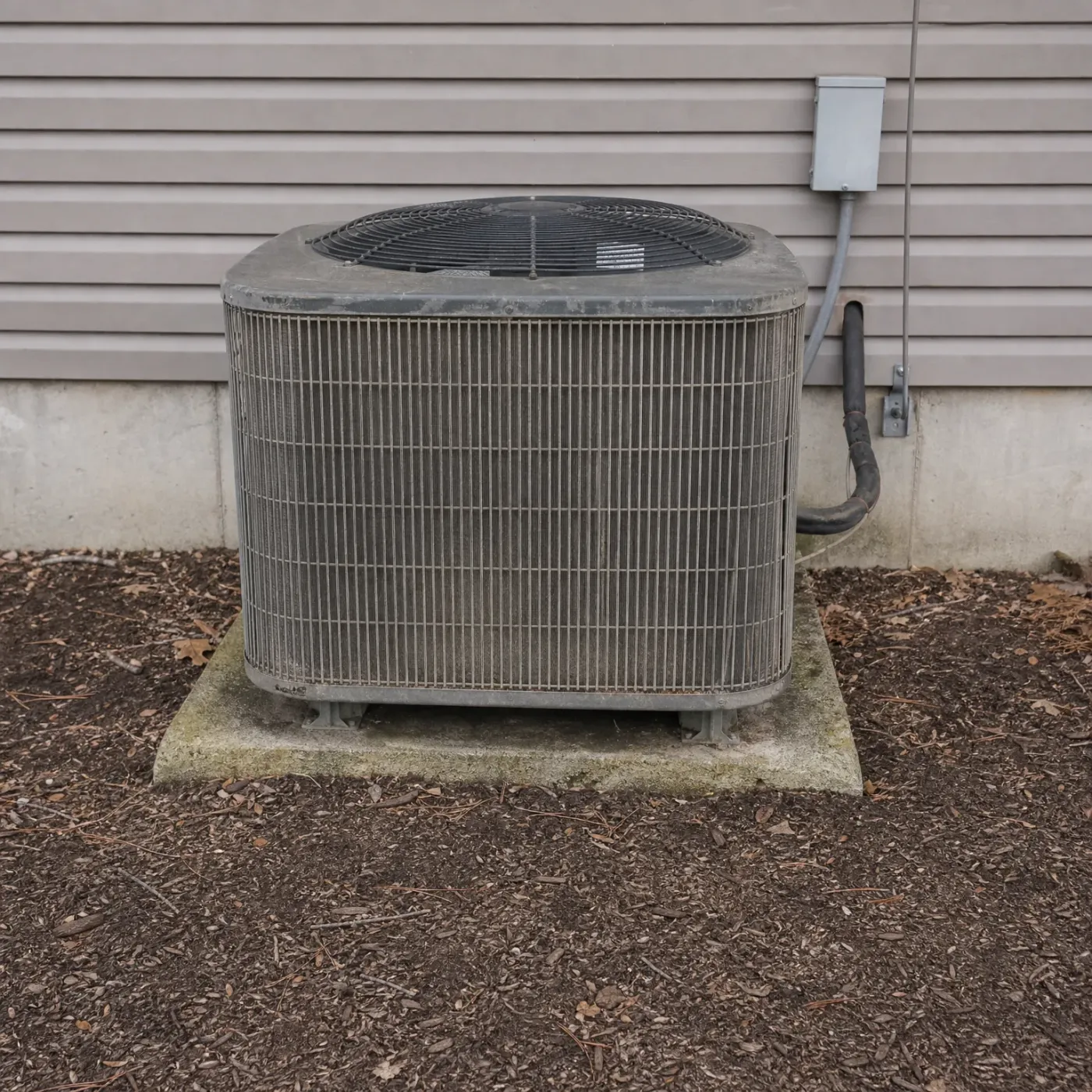
An outdoor air conditioning condenser unit with a dirty mesh coil guard sits on a concrete pad beside a house with horizontal lap siding, a wall vent, and conduit running to an electrical disconnect box.

Caked fins, trapped heat

Dirt and debris cover the mesh and the fins behind it. That buildup holds heat against the coil, and a condenser running hot like this is more likely to be the source of a burning smell than anything inside the house.

Power costs 13.17 cents per kilowatt-hour statewide

At 13.17 cents a kilowatt-hour, your AC is already cheap to run right when it's working properly. A motor or capacitor pushing itself into a burning smell is pulling more power than it should, and that's current you're paying for without getting the cooling to show for it.

EIA-861 2025 statewide residential average

A burning smell from your AC comes down to a short list of causes, and most of them are electrical, not something you can diagnose by sniffing around the vent. A blower motor with worn windings, a failing capacitor, dust burning off at startup, debris packed against the outdoor coil. Each has its own signs, and the fix depends on which one you've got. What you don't want is a technician guessing at it over the phone or showing up without knowing your equipment. A local contractor who works on air conditioners all summer in Washington has seen these failures before and knows what tends to go first in units your age and type. When you request a match through this page, it goes to one licensed contractor near you, not a handful of companies competing for the job, so you're dealing with one person who looked at your situation and reached out, not a stack of callbacks to sort through. That smell is your AC telling you something specific is wrong. Getting the right person to look at it is how you find out what.

The dark gabled metal roof and upper wall of a house with one window, framed by conifer trees, with mist-covered forested mountains and overcast sky behind.

The right pro for this job

Find a licensed air conditioner pro

Asking costs nothing, and the choice to hire stays yours.

A motor that's already straining won't fix itself by waiting another week. The longer it runs hot, the more likely it fails outright, usually on the afternoon you need the house cool. A local contractor who works on these systems all summer can tell you fast whether it's the motor, the capacitor, or something simpler.